














Ophthalmology Officer
Ophthalmology Officers work with patients with refraction and low vision, clinical ophthalmology surgery and work in the community on ophthalmic conditions. (Info: Ministry of Education, Science, Technology and Sports, Career Guidance Handbook)
Ophthalmology Officer
Ophthalmology Officer
Diagnose, treat, and help prevent diseases and injuries of the eyes and related structures.
Sample of reported job titles: Comprehensive Ophthalmologist; Director, Emergency Ophthalmology Services; General Ophthalmologist; Ophthalmologist; Ophthalmologist-Retina Specialist; Pediatric Ophthalmologist; Physician; Retina Subspecialist; Retinal Surgeon; Vitreo-Retinal Surgeon
Daily/Routine Tasks
- 1.Perform ophthalmic surgeries such as cataract, glaucoma, refractive, corneal, vitro-retinal, eye muscle, and oculoplastic surgeries.
- 2.Perform comprehensive examinations of the visual system to determine the nature or extent of ocular disorders.
- 3.Diagnose or treat injuries, disorders, or diseases of the eye and eye structures including the cornea, sclera, conjunctiva, or eyelids.
- 4.Document or evaluate patients' medical histories.
- 5.Provide or direct the provision of postoperative care.
- 6.Perform, order, or interpret the results of diagnostic or clinical tests.
- 7.Develop treatment plans based on patients' histories and goals, the nature and severity of disorders, and treatment risks and benefits.
- 8.Prescribe or administer topical or systemic medications to treat ophthalmic conditions and to manage pain.
- 9.Perform laser surgeries to alter, remove, reshape, or replace ocular tissue.
- 10.Provide ophthalmic consultation to other medical professionals.
- 11.Educate patients about maintenance and promotion of healthy vision.
- 12.Collaborate with multidisciplinary teams of health professionals to provide optimal patient care.
- 13.Refer patients for more specialized treatments when conditions exceed the experience, expertise, or scope of practice of practitioner.
- 14.Develop or implement plans and procedures for ophthalmologic services.
- 15.Instruct interns, residents, or others in ophthalmologic procedures and techniques.
- 16.Prescribe ophthalmologic treatments or therapies such as chemotherapy, cryotherapy, and low vision therapy.
- 17.Prescribe corrective lenses such as glasses and contact lenses.
- 18.Conduct clinical or laboratory-based research in ophthalmology.
Key Knowledge Areas
- Medicine and Dentistry — Knowledge of the information and techniques needed to diagnose and treat human injuries, diseases, and deformities. This includes symptoms, treatment alternatives, drug properties and interactions, and preventive health-care measures.
- English Language — Knowledge of the structure and content of the English language including the meaning and spelling of words, rules of composition, and grammar.
- Biology — Knowledge of plant and animal organisms, their tissues, cells, functions, interdependencies, and interactions with each other and the environment.
- Education and Training — Knowledge of principles and methods for curriculum and training design, teaching and instruction for individuals and groups, and the measurement of training effects.
- Customer and Personal Service — Knowledge of principles and processes for providing customer and personal services. This includes customer needs assessment, meeting quality standards for services, and evaluation of customer satisfaction.
- Therapy and Counseling — Knowledge of principles, methods, and procedures for diagnosis, treatment, and rehabilitation of physical and mental dysfunctions, and for career counseling and guidance.
- Mathematics — Knowledge of arithmetic, algebra, geometry, calculus, statistics, and their applications.
- Psychology — Knowledge of human behavior and performance; individual differences in ability, personality, and interests; learning and motivation; psychological research methods; and the assessment and treatment of behavioral and affective disorders.
- Administration and Management — Knowledge of business and management principles involved in strategic planning, resource allocation, human resources modeling, leadership technique, production methods, and coordination of people and resources.
- Physics — Knowledge and prediction of physical principles, laws, their interrelationships, and applications to understanding fluid, material, and atmospheric dynamics, and mechanical, electrical, atomic and sub- atomic structures and processes.
Skills Needed
- Critical Thinking — Using logic and reasoning to identify the strengths and weaknesses of alternative solutions, conclusions or approaches to problems.
- Active Listening — Giving full attention to what other people are saying, taking time to understand the points being made, asking questions as appropriate, and not interrupting at inappropriate times.
- Reading Comprehension — Understanding written sentences and paragraphs in work related documents.
- Speaking — Talking to others to convey information effectively.
- Coordination — Adjusting actions in relation to others' actions.
- Judgment and Decision Making — Considering the relative costs and benefits of potential actions to choose the most appropriate one.
- Social Perceptiveness — Being aware of others' reactions and understanding why they react as they do.
- Complex Problem Solving — Identifying complex problems and reviewing related information to develop and evaluate options and implement solutions.
- Monitoring — Monitoring/Assessing performance of yourself, other individuals, or organizations to make improvements or take corrective action.
- Science — Using scientific rules and methods to solve problems.
Career Interests
Interest code: ISR
- Investigative — Investigative occupations frequently involve working with ideas, and require an extensive amount of thinking. These occupations can involve searching for facts and figuring out problems mentally.
- Social — Social occupations frequently involve working with, communicating with, and teaching people. These occupations often involve helping or providing service to others.
- Realistic — Realistic occupations frequently involve work activities that include practical, hands-on problems and solutions. They often deal with plants, animals, and real-world materials like wood, tools, and machinery. Many of the occupations require working outside, and do not involve a lot of paperwork or working closely with others.
Work Styles
- Integrity — Job requires being honest and ethical.
- Attention to Detail — Job requires being careful about detail and thorough in completing work tasks.
- Dependability — Job requires being reliable, responsible, and dependable, and fulfilling obligations.
- Concern for others — Job requires being sensitive to others' needs and feelings and being understanding and helpful on the job.
- Achievement/Effort — Job requires establishing and maintaining personally challenging achievement goals and exerting effort toward mastering tasks.
Work Values
- Achievement — Occupations that satisfy this work value are results oriented and allow employees to use their strongest abilities, giving them a feeling of accomplishment. Corresponding needs are Ability Utilization and Achievement.
- Independence — Occupations that satisfy this work value allow employees to work on their own and make decisions. Corresponding needs are Creativity, Responsibility and Autonomy.
- Recognition — Occupations that satisfy this work value offer advancement, potential for leadership, and are often considered prestigious. Corresponding needs are Advancement, Authority, Recognition and Social Status.
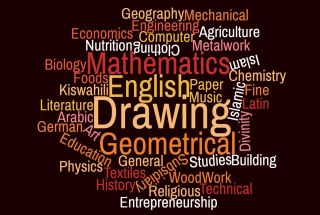
Some of the courses that prepare students for this career
-
Apprenticeship is the proven way for getting excellent workers
Know more -
How to choose the right career path
Know more -
How to draw career inspiration from what you learn in class
Know more -
why you cannot give up now
Know more -
Know more -
Know more -
Know more -
 The 10,000 hours of practice
Know more -
Know more -
Know more -
Know more -
Know more -
Know more -
Valuing today as you visualize tomorrow
Know more -
Jack Ma tells it all
Know more -
Joint courses give graduates edge
Know more -
Sports can boost your confidence
Know more -
 There are more than three job opportunities in a given profession that one can take advantage of.
Know more -
Know more
Watch and Listen what the practioneers in your field are saying