
















Health Counselor
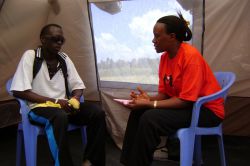
Counsel with emphasis on prevention. Work with individuals and groups to promote optimum mental and emotional health. May help individuals deal with issues associated with addictions and substance abuse; family, parenting, and marital problems; stress management; self-esteem; and aging.
Health Counselor
Daily tasks/Routine activities
1. Maintain confidentiality of records relating to clients' treatment.
2. Encourage clients to express their feelings and discuss what is happening in their lives, helping them to develop insight into themselves or their relationships. Collect information about clients through interviews, observation, or tests.
3. Assess patients for risk of suicide attempts.
4. Fill out and maintain client-related paperwork, including federal- and state-mandated forms, client diagnostic records, and progress notes.
5. Prepare and maintain all required treatment records and reports.
6. Counsel clients or patients, individually or in group sessions, to assist in overcoming dependencies, adjusting to life, or making changes.
7. Guide clients in the development of skills or strategies for dealing with their problems.
8. Perform crisis interventions with clients.
9. Develop and implement treatment plans based on clinical experience and knowledge.
10. Evaluate clients' physical or mental condition, based on review of client information.
11. Act as client advocates to coordinate required services or to resolve emergency problems in crisis situations.
12. Modify treatment activities or approaches as needed to comply with changes in clients' status.
13. Evaluate the effectiveness of counseling programs on clients' progress in resolving identified problems and moving towards defined objectives.
14. Meet with families, probation officers, police, or other interested parties to exchange necessary information during the treatment process.
Key Knowledge Areas
Psychology — Knowledge of human behavior and performance; individual differences in ability, personality, and interests; learning and motivation; psychological research methods; and the assessment and treatment of behavioral and affective disorders.
Therapy and Counseling — Knowledge of principles, methods, and procedures for diagnosis, treatment, and rehabilitation of physical and mental dysfunctions, and for career counseling and guidance.
Customer and Personal Service — Knowledge of principles and processes for providing customer and personal services. This includes customer needs assessment, meeting quality standards for services, and evaluation of customer satisfaction.
Sociology and Anthropology — Knowledge of group behavior and dynamics, societal trends and influences, human migrations, ethnicity, cultures and their history and origins.
English Language — Knowledge of the structure and content of the English language including the meaning and spelling of words, rules of composition, and grammar.
Education and Training — Knowledge of principles and methods for curriculum and training design, teaching and instruction for individuals and groups, and the measurement of training effects.
Clerical — Knowledge of administrative and clerical procedures and systems such as word processing, managing files and records, stenography and transcription, designing forms, and other office procedures and terminology.
Philosophy and Theology — Knowledge of different philosophical systems and religions. This includes their basic principles, values, ethics, ways of thinking, customs, practices, and their impact on human culture.
Skills
Active Listening — Giving full attention to what other people are saying, taking time to understand the points being made, asking questions as appropriate, and not interrupting at inappropriate times.
Social Perceptiveness — Being aware of others' reactions and understanding why they react as they do.
Service Orientation — Actively looking for ways to help people.
Speaking — Talking to others to convey information effectively.
Critical Thinking — Using logic and reasoning to identify the strengths and weaknesses of alternative solutions, conclusions or approaches to problems.
Judgment and Decision Making — Considering the relative costs and benefits of potential actions to choose the most appropriate one.
Monitoring — Monitoring/Assessing performance of yourself, other individuals, or organizations to make improvements or take corrective action.
Writing — Communicating effectively in writing as appropriate for the needs of the audience.
Reading Comprehension — Understanding written sentences and paragraphs in work related documents.
Persuasion — Persuading others to change their minds or behavior.
Active Learning — Understanding the implications of new information for both current and future problem-solving and decision-making.
Learning Strategies — Selecting and using training/instructional methods and procedures appropriate for the situation when learning or teaching new things.
Abilities
Oral Comprehension — The ability to listen to and understand information and ideas presented through spoken words and sentences.
Oral Expression — The ability to communicate information and ideas in speaking so others will understand.
Problem Sensitivity — The ability to tell when something is wrong or is likely to go wrong. It does not involve solving the problem, only recognizing there is a problem.
Inductive Reasoning — The ability to combine pieces of information to form general rules or conclusions (includes finding a relationship among seemingly unrelated events).
Interests
Social — Social occupations frequently involve working with, communicating with, and teaching people. These occupations often involve helping or providing service to others.
Investigative — Investigative occupations frequently involve working with ideas, and require an extensive amount of thinking. These occupations can involve searching for facts and figuring out problems mentally.
Artistic — Artistic occupations frequently involve working with forms, designs and patterns. They often require self-expression and the work can be done without following a clear set of rules.
Some of the courses that prepare students for this career
-
Apprenticeship is the proven way for getting excellent workers
Know more -
How to choose the right career path
Know more -
How to draw career inspiration from what you learn in class
Know more -
why you cannot give up now
Know more -
Know more -
Know more -
Know more -
 The 10,000 hours of practice
Know more -
Know more -
Know more -
Know more -
Know more -
Know more -
Know more -
Valuing today as you visualize tomorrow
Know more -
Jack Ma tells it all
Know more -
Joint courses give graduates edge
Know more -
Sports can boost your confidence
Know more -
 There are more than three job opportunities in a given profession that one can take advantage of.
Know more -
Know more
Watch and Listen what the practioneers in your field are saying