




Medical Radiographer
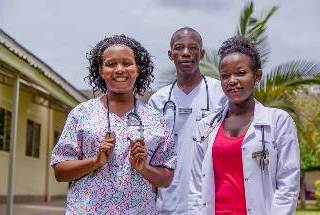
Medical Radiographers are part of hospital teams. They produce diagnostic radiographs and understand the problems of fluoroscopic and other special techniques as well as therapeutic treatments of patients using radiation. Upon completion of the course, they employed in Government in non-Government Hospitals and Health Center III and IV. (Info: Ministry of Education, Science, Technology and Sports, Career Guidance Handbook)
Medical Radiographer
Medical Radiographer
Examine and diagnose disorders and diseases using x-rays and radioactive materials. May treat patients. Maintain and use equipment and supplies necessary to demonstrate portions of the human body on x-ray film or fluoroscopic screen for diagnostic purposes.
Sample of reported job titles: Attending Radiologist; Diagnostic Radiologist; Interventional Neuroradiologist; Interventional Radiologist; Neuroradiologist; Physician; Radiologist; Radiologist, Chief of Breast Imaging; Radiology Resident; Staff Radiologist
Daily/Routine Tasks
- 1.Perform or interpret the outcomes of diagnostic imaging procedures including magnetic resonance imaging (MRI), computer tomography (CT), positron emission tomography (PET), nuclear cardiology treadmill studies, mammography, or ultrasound.
- 2.Review or transmit images and information using picture archiving or communications systems.
- 3.Communicate examination results or diagnostic information to referring physicians, patients, or families.
- 4.Provide counseling to radiologic patients to explain the processes, risks, benefits, or alternative treatments.
- 5.Document the performance, interpretation, or outcomes of all procedures performed.
- 6.Establish or enforce standards for protection of patients or personnel.
- 7.Administer radiopaque substances by injection, orally, or as enemas to render internal structures and organs visible on x-ray films or fluoroscopic screens.
- 8.Implement protocols in areas such as drugs, resuscitation, emergencies, power failures, and infection control.
- 9.Provide advice on types or quantities of radiology equipment needed to maintain facilities.
- 10.Participate in research projects involving radiology.
- 11.Conduct physical examinations to inform decisions about appropriate procedures.
Key Knowledge Area
- Medicine and Dentistry — Knowledge of the information and techniques needed to diagnose and treat human injuries, diseases, and deformities. This includes symptoms, treatment alternatives, drug properties and interactions, and preventive health-care measures.
- Biology — Knowledge of plant and animal organisms, their tissues, cells, functions, interdependencies, and interactions with each other and the environment.
- English Language — Knowledge of the structure and content of the English language including the meaning and spelling of words, rules of composition, and grammar.
- Physics — Knowledge and prediction of physical principles, laws, their interrelationships, and applications to understanding fluid, material, and atmospheric dynamics, and mechanical, electrical, atomic and sub- atomic structures and processes.
- Public Safety and Security — Knowledge of relevant equipment, policies, procedures, and strategies to promote effective local, state, or national security operations for the protection of people, data, property, and institutions.
- Mathematics — Knowledge of arithmetic, algebra, geometry, calculus, statistics, and their applications.
Skills Needed
- Writing — Communicating effectively in writing as appropriate for the needs of the audience.
- Critical Thinking — Using logic and reasoning to identify the strengths and weaknesses of alternative solutions, conclusions or approaches to problems.
- Judgment and Decision Making — Considering the relative costs and benefits of potential actions to choose the most appropriate one.
- Speaking — Talking to others to convey information effectively.
- Complex Problem Solving — Identifying complex problems and reviewing related information to develop and evaluate options and implement solutions.
- Active Learning — Understanding the implications of new information for both current and future problem-solving and decision-making.
- Instructing — Teaching others how to do something.
- Science — Using scientific rules and methods to solve problems.
- Time Management — Managing one's own time and the time of others.
Career Interests
Interest code: IRS
- Investigative — Investigative occupations frequently involve working with ideas, and require an extensive amount of thinking. These occupations can involve searching for facts and figuring out problems mentally.
- Realistic — Realistic occupations frequently involve work activities that include practical, hands-on problems and solutions. They often deal with plants, animals, and real-world materials like wood, tools, and machinery. Many of the occupations require working outside, and do not involve a lot of paperwork or working closely with others.
- Social — Social occupations frequently involve working with, communicating with, and teaching people. These occupations often involve helping or providing service to others.
Work Styles
- Attention to Detail — Job requires being careful about detail and thorough in completing work tasks.
- Concern for others — Job requires being sensitive to others' needs and feelings and being understanding and helpful on the job.
- Dependability — Job requires being reliable, responsible, and dependable, and fulfilling obligations.
- Analytical Thinking — Job requires analyzing information and using logic to address work-related issues and problems.
- Achievement/Effort — Job requires establishing and maintaining personally challenging achievement goals and exerting effort toward mastering tasks.
Work Values
- Achievement — Occupations that satisfy this work value are results oriented and allow employees to use their strongest abilities, giving them a feeling of accomplishment. Corresponding needs are Ability Utilization and Achievement.
- Recognition — Occupations that satisfy this work value offer advancement, potential for leadership, and are often considered prestigious. Corresponding needs are Advancement, Authority, Recognition and Social Status.
- Independence — Occupations that satisfy this work value allow employees to work on their own and make decisions. Corresponding needs are Creativity, Responsibility and Autonomy.
Some of the courses that prepare students for this career
-
Apprenticeship is the proven way for getting excellent workers
Know more -
How to choose the right career path
Know more -
How to draw career inspiration from what you learn in class
Know more -
why you cannot give up now
Know more -
Know more -
Know more -
Know more -
 The 10,000 hours of practice
Know more -
Know more -
Know more -
Know more -
Know more -
Know more -
Valuing today as you visualize tomorrow
Know more -
Jack Ma tells it all
Know more -
Joint courses give graduates edge
Know more -
Sports can boost your confidence
Know more -
 There are more than three job opportunities in a given profession that one can take advantage of.
Know more -
Know more
Watch and Listen what the practioneers in your field are saying