















Chemist
Conduct qualitative and quantitative chemical analyses or experiments in laboratories for quality or process control or to develop new products or knowledge.
Chemist
Daily tasks/Routine activities
1. Analyze organic or inorganic compounds to determine chemical or physical properties, composition, structure, relationships, or reactions, using chromatography, spectroscopy, or spectrophotometry techniques.
2. Conduct quality control tests.
3. Maintain laboratory instruments to ensure proper working order and troubleshoot malfunctions when needed.
4. Prepare test solutions, compounds, or reagents for laboratory personnel to conduct tests.
5. Induce changes in composition of substances by introducing heat, light, energy, or chemical catalysts for quantitative or qualitative analysis.
6. Evaluate laboratory safety procedures to ensure compliance with standards or to make improvements as needed.
7. Compile and analyze test information to determine process or equipment operating efficiency or to diagnose malfunctions.
8. Write technical papers or reports or prepare standards and specifications for processes, facilities, products, or tests.
9. Confer with scientists or engineers to conduct analyses of research projects, interpret test results, or develop nonstandard tests.
10.Develop, improve, or customize products, equipment, formulas, processes, or analytical methods.
11.Direct, coordinate, or advise personnel in test procedures for analyzing components or physical properties of materials.
12. Purchase laboratory supplies, such as chemicals, when supplies are low or near their expiration date.
13. Study effects of various methods of processing, preserving, or packaging on composition or properties of foods.
Key knowledge activities
The following knowledge areas aid a Chemist to execute his/her duties better;
Chemistry — Knowledge of the chemical composition, structure, and properties of substances and of the chemical processes and transformations that they undergo. This includes uses of chemicals and their interactions, danger signs, production techniques, and disposal methods.
Mathematics — Knowledge of arithmetic, algebra, geometry, calculus, statistics, and their applications.
Production and Processing — Knowledge of raw materials, production processes, quality control, costs, and other techniques for maximizing the effective manufacture and distribution of goods.
Computers and Electronics — Knowledge of circuit boards, processors, chips, electronic equipment, and computer hardware and software, including applications and programming.
English Language — Knowledge of the structure and content of the English language including the meaning and spelling of words, rules of composition, and grammar.
Skills
The following skills aid a Chemist carry out his/her duties with ease ;.
Science — Using scientific rules and methods to solve problems.
Critical Thinking — Using logic and reasoning to identify the strengths and weaknesses of alternative solutions, conclusions or approaches to problems.
Reading Comprehension — Understanding written sentences and paragraphs in work related documents.
Active Listening — Giving full attention to what other people are saying, taking time to understand the points being made, asking questions as appropriate, and not interrupting at inappropriate times.
Mathematics — Using mathematics to solve problems.
Abilities
Deductive Reasoning — The ability to apply general rules to specific problems to produce answers that make sense.
Inductive Reasoning — The ability to combine pieces of information to form general rules or conclusions (includes finding a relationship among seemingly unrelated events).
Oral Comprehension — The ability to listen to and understand information and ideas presented through spoken words and sentences.
Written Comprehension — The ability to read and understand information and ideas presented in writing.
Mathematical Reasoning — The ability to choose the right mathematical methods or formulas to solve a problem
Some of the courses that prepare students for this career
-
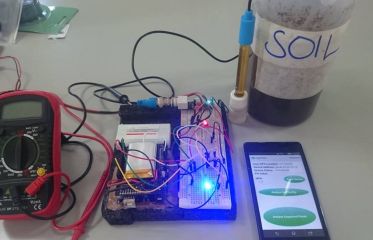 Empowering farmers with IT
Know more
-
Science fiction or fact
Know more -
My Experience as a Mentor at Digigirlz event
Know more -
Apprenticeship is the proven way for getting excellent workers
Know more -
Know more -
How to choose the right career path
Know more -
How to draw career inspiration from what you learn in class
Know more -
Know more -
Know more -
Sodium peroxide disarming Chlorine
Know more -
why you cannot give up now
Know more -
Know more -
Know more -
Know more -
 The 10,000 hours of practice
Know more -
Know more -
Know more -
Know more -
Know more -
The future of products from biotechnology hangs in balance
Know more -
Know more -
Valuing today as you visualize tomorrow
Know more -
Jack Ma tells it all
Know more -
Joint courses give graduates edge
Know more -
Sports can boost your confidence
Know more -
 There are more than three job opportunities in a given profession that one can take advantage of.
Know more -
Know more -
Know more
Watch and Listen what the practioneers in your field are saying