











Biomedical Technologist
Apply knowledge of engineering, biology, and bio mechanical principles to the design, development, and evaluation of biological and health systems and products, such as artificial organs, prostheses, instrumentation, medical information systems, and health management and care delivery systems.
Biomedical Technologist
Daily tasks/Routine activities
1. Conduct research, along with life scientists, chemists, and medical scientists, on the engineering aspects of the biological systems of humans and animals.
2. Design and develop medical diagnostic and clinical instrumentation, equipment, and procedures, using the principles of engineering and biobehavioral sciences.
3. Teach biomedical engineering or disseminate knowledge about the field through writing or consulting.
4. Research new materials to be used for products, such as implanted artificial organs.
5. Develop models or computer simulations of human biobehavioral systems to obtain data for measuring or controlling life processes.
6. Adapt or design computer hardware or software for medical science uses.
7. Diagnose and interpret bioelectric data, using signal processing techniques.
8. Design and deliver technology to assist people with disabilities.
9. Evaluate the safety, efficiency, and effectiveness of biomedical equipment.
10. Manage teams of engineers by creating schedules, tracking inventory, creating and using budgets, and overseeing contract obligations and deadlines.
11. Advise and assist in the application of instrumentation in clinical environments.
12. Write documents describing protocols, policies, standards for use, maintenance, and repair of medical equipment.
Key knowledge areas.
The following knowledge areas aid a Biomedical technologist to execute his/her duties better;
Biology — Knowledge of plant and animal organisms, their tissues, cells, functions, interdependencies, and interactions with each other and the environment.
Mathematics — Knowledge of arithmetic, algebra, geometry, calculus, statistics, and their applications.
Engineering and Technology — Knowledge of the practical application of engineering science and technology. This includes applying principles, techniques, procedures, and equipment to the design and production of various goods and services.
Physics — Knowledge and prediction of physical principles, laws, their interrelationships, and applications to understanding fluid, material, and atmospheric dynamics, and mechanical, electrical, atomic and sub- atomic structures and processes.
English Language — Knowledge of the structure and content of the English language including the meaning and spelling of words, rules of composition, and grammar.
Skills
The following skills aid a Biomedical technologist carry out his/her duties with ease ;.
Critical Thinking — Using logic and reasoning to identify the strengths and weaknesses of alternative solutions, conclusions or approaches to problems.
Science — Using scientific rules and methods to solve problems.
Complex Problem Solving — Identifying complex problems and reviewing related information to develop and evaluate options and implement solutions.
Judgment and Decision Making — Considering the relative costs and benefits of potential actions to choose the most appropriate one.
Reading Comprehension — Understanding written sentences and paragraphs in work related documents.
Abilities
Deductive Reasoning — The ability to apply general rules to specific problems to produce answers that make sense.
Inductive Reasoning — The ability to combine pieces of information to form general rules or conclusions (includes finding a relationship among seemingly unrelated events).
Near Vision — The ability to see details at close range (within a few feet of the observer).
Problem Sensitivity — The ability to tell when something is wrong or is likely to go wrong. It does not involve solving the problem, only recognizing there is a problem.
Written Comprehension — The ability to read and understand information and ideas presented in writing.
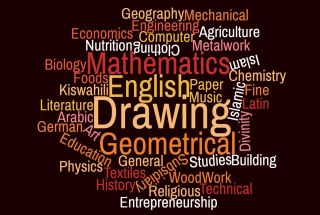
Some of the courses that prepare students for this career
-
Apprenticeship is the proven way for getting excellent workers
Know more -
How to choose the right career path
Know more -
How to draw career inspiration from what you learn in class
Know more -
Know more -
why you cannot give up now
Know more -
Know more -
Know more -
Know more -
 The 10,000 hours of practice
Know more -
Know more -
Know more -
Know more -
Know more -
Know more -
Valuing today as you visualize tomorrow
Know more -
Jack Ma tells it all
Know more -
Joint courses give graduates edge
Know more -
Sports can boost your confidence
Know more -
 There are more than three job opportunities in a given profession that one can take advantage of.
Know more -
Know more
Watch and Listen what the practioneers in your field are saying