








Microbiologist
Investigate the growth, structure, development, and other characteristics of microscopic organisms, such as bacteria, algae, or fungi. Includes medical microbiologists who study the relationship between organisms and disease or the effects of antibiotics on microorganisms.
Microbiologist
Investigate the growth, structure, development, and other characteristics of microscopic organisms, such as bacteria, algae, or fungi. Includes medical microbiologists who study the relationship between organisms and disease or the effects of antibiotics on microorganisms.
Also Known as: Bacteriologist, Clinical Laboratory Scientist, Clinical Microbiologist, Microbiological Analyst, Microbiological Laboratory Technician, Microbiologist, Microbiology Laboratory Manager, Professor of Microbiology, Quality Control Microbiologist (QC Microbiologist), Study Director
Daily Activities
Microbiologists carry out the tasks listed below in their core line of work
1. Investigate the relationship between organisms and disease including the control of epidemics and the effects of antibiotics on microorganisms
2. Prepare technical reports and recommendations based upon research outcomes.
3. Supervise biological technologists and technicians and other scientists.
4. Provide laboratory services for health departments, for community environmental health programs and for physicians needing information for diagnosis and treatment.
5. Use a variety of specialized equipment such as electron microscopes, gas chromatographs and high pressure liquid chromatographs, electrophoresis units, thermocyclers, fluorescence activated cell sorters and phosphoimagers.
6. Examine physiological, morphological, and cultural characteristics, using microscope, to identify and classify microorganisms in human, water, and food specimens.
7. Study growth, structure, development, and general characteristics of bacteria and other microorganisms to understand their relationship to human, plant, and animal health.
8. Isolate and maintain cultures of bacteria or other microorganisms in prescribed or developed media, controlling moisture, aeration, temperature, and nutrition.
9. Observe action of microorganisms upon living tissues of plants, higher animals, and other microorganisms, and on dead organic matter.
10. Study the structure and function of human, animal and plant tissues, cells, pathogens and toxins.
Key Knowledge Areas
Biology — Knowledge of plant and animal organisms, their tissues, cells, functions, interdependencies, and interactions with each other and the environment
English Language — Knowledge of the structure and content of the English language including the meaning and spelling of words, rules of composition, and grammar.
Chemistry — Knowledge of the chemical composition, structure, and properties of substances and of the chemical processes and transformations that they undergo. This includes uses of chemicals and their interactions, danger signs, production techniques, and disposal methods.
Mathematics — Knowledge of arithmetic, algebra, geometry, calculus, statistics, and their applications.
Education and Training — Knowledge of principles and methods for curriculum and training design, teaching and instruction for individuals and groups, and the measurement of training effects.
Key Abilities
The are some of the essential abilities of a Microbiologist
Inductive Reasoning — The ability to combine pieces of information to form general rules or conclusions (includes finding a relationship among seemingly unrelated events).
Written Comprehension — The ability to read and understand information and ideas presented in writing.
Category Flexibility — The ability to generate or use different sets of rules for combining or grouping things in different ways.
Deductive Reasoning — The ability to apply general rules to specific problems to produce answers that make sense.
Information Ordering — The ability to arrange things or actions in a certain order or pattern according to a specific rule or set of rules (e.g., patterns of numbers, letters, words, pictures, mathematical operations).
Selective Attention — The ability to concentrate on a task over a period of time without being distracted.
Finger Dexterity — The ability to make precisely coordinated movements of the fingers of one or both hands to grasp, manipulate, or assemble very small objects.
Perceptual Speed — The ability to quickly and accurately compare similarities and differences among sets of letters, numbers, objects, pictures, or patterns. The things to be compared may be presented at the same time or one after the other. This ability also includes comparing a presented object with a remembered object.
Key Skills
Here are some very essential skills to have
Science — Using scientific rules and methods to solve problems.
Critical Thinking — Using logic and reasoning to identify the strengths and weaknesses of alternative solutions, conclusions or approaches to problems.
Writing — Communicating effectively in writing as appropriate for the needs of the audience.
Active Listening — Giving full attention to what other people are saying, taking time to understand the points being made, asking questions as appropriate, and not interrupting at inappropriate times.
Reading Comprehension — Understanding written sentences and paragraphs in work related documents.
Monitoring — Monitoring/Assessing performance of yourself, other individuals, or organizations to make improvements or take corrective action.
Complex Problem Solving — Identifying complex problems and reviewing related information to develop and evaluate options and implement solutions.
Social Perceptiveness — Being aware of others' reactions and understanding why they react as they do.
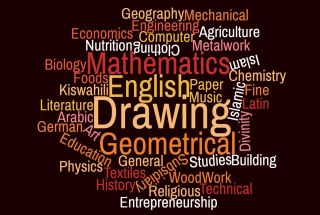
Some of the courses that prepare students for this career
-
Apprenticeship is the proven way for getting excellent workers
Know more -
How to choose the right career path
Know more -
How to draw career inspiration from what you learn in class
Know more -
why you cannot give up now
Know more -
Know more -
Know more -
Know more -
 The 10,000 hours of practice
Know more -
Know more -
Know more -
Know more -
Know more -
Know more -
Valuing today as you visualize tomorrow
Know more -
Jack Ma tells it all
Know more -
Joint courses give graduates edge
Know more -
Sports can boost your confidence
Know more -
 There are more than three job opportunities in a given profession that one can take advantage of.
Know more -
Know more
Watch and Listen what the practioneers in your field are saying