







Cardiovascular Technologist
Conduct tests on pulmonary or cardiovascular systems of patients for diagnostic purposes.
Cardiovascular Technologist
Daily tasks/Routine activities
1. Conduct electrocardiogram (EKG), phonocardiogram, echocardiogram, stress testing, or other cardiovascular tests to record patients' cardiac activity, using specialized electronic test equipment, recording devices, or laboratory instruments.
2. Explain testing procedures to patients to obtain cooperation and reduce anxiety.
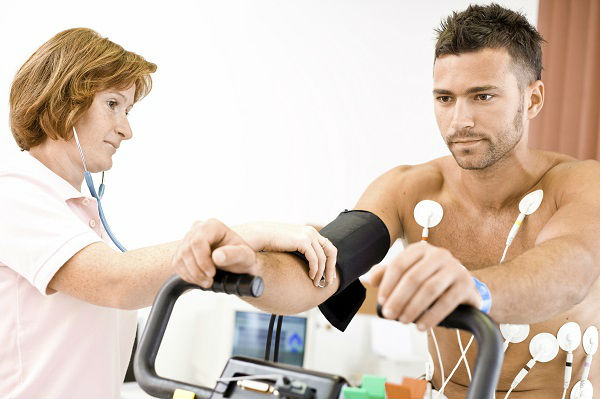
3. Monitor patients' blood pressure and heart rate using electrocardiogram (EKG) equipment during diagnostic or therapeutic procedures to notify the physician if something appears wrong.
4. Obtain and record patient identification, medical history, or test results.
5. Monitor patients' comfort and safety during tests, alerting physicians to abnormalities or changes in patient responses.
6. Prepare and position patients for testing.
7. Attach electrodes to the patients' chests, arms, and legs, connect electrodes to leads from the electrocardiogram (EKG) machine, and operate the EKG machine to obtain a reading.
8. Adjust equipment and controls according to physicians' orders or established protocol.
9. Check, test, and maintain cardiology equipment, making minor repairs when necessary, to ensure proper operation.
10. Supervise or train other cardiology technologists or students.
11. Compare measurements of heart wall thickness and chamber sizes to standard norms to identify abnormalities.
12. Maintain a proper sterile field during surgical procedures.
13. Observe ultrasound display screen and listen to signals to record vascular information, such as blood pressure, limb volume changes, oxygen saturation, or cerebral circulation.
14. Assist surgeons with vascular procedures, such as preparing balloons and stents.
Key knowledge areas
The following knowledge areas aid a Cardiovascular Technologist to execute his/her duties better;
Customer and Personal Service — Knowledge of principles and processes for providing customer and personal services. This includes customer needs assessment, meeting quality standards for services, and evaluation of customer satisfaction.
English Language — Knowledge of the structure and content of the English language including the meaning and spelling of words, rules of composition, and grammar.
Medicine and Dentistry — Knowledge of the information and techniques needed to diagnose and treat human injuries, diseases, and deformities. This includes symptoms, treatment alternatives, drug properties and interactions, and preventive health-care measures.
Computers and Electronics — Knowledge of circuit boards, processors, chips, electronic equipment, and computer hardware and software, including applications and programming.
Education and Training — Knowledge of principles and methods for curriculum and training design, teaching and instruction for individuals and groups, and the measurement of training effects.
Skills
The following skills aid a Community psychologist carry out his/her duties with ease ;
Active Listening — Giving full attention to what other people are saying, taking time to understand the points being made, asking questions as appropriate, and not interrupting at inappropriate times.
Critical Thinking — Using logic and reasoning to identify the strengths and weaknesses of alternative solutions, conclusions or approaches to problems.
Monitoring — Monitoring/Assessing performance of yourself, other individuals, or organizations to make improvements or take corrective action.
Operation Monitoring — Watching gauges, dials, or other indicators to make sure a machine is working properly.
Speaking — Talking to others to convey information effectively.
Abilities
Problem Sensitivity — The ability to tell when something is wrong or is likely to go wrong. It does not involve solving the problem, only recognizing there is a problem.
Near Vision — The ability to see details at close range (within a few feet of the observer).
Oral Comprehension — The ability to listen to and understand information and ideas presented through spoken words and sentences.
Oral Expression — The ability to communicate information and ideas in speaking so others will understand.
Deductive Reasoning — The ability to apply general rules to specific problems to produce answers that make sense.
Some of the courses that prepare students for this career
Watch and Listen what the practioneers in your field are saying