Evaluate materials and develop machinery and processes to manufacture materials for use in products that must meet specialized design and performance specifications. Develop new uses for known materials.
Sample of reported job titles: Materials and Processes Manager, Materials Branch Chief, Materials Development Engineer, Materials Engineer, Materials Research Engineer, Metallurgical Engineer, Metallurgist, Process Engineer, Research Engineer, Test Engineer
1. Review new product plans and make recommendations for material selection based on design objectives, such as strength, weight, heat resistance, electrical conductivity, and cost.
2. Supervise the work of technologists, technicians, and other engineers and scientists.
3. Analyze product failure data and laboratory test results to determine causes of problems and develop solutions.
4. Conduct or supervise tests on raw materials or finished products to ensure their quality.
5. Plan and implement laboratory operations for the purpose of developing material and fabrication procedures that meet cost, product specification, and performance standards.
6. Design and direct the testing or control of processing procedures.
7. Monitor material performance and evaluate material deterioration.
8. Perform managerial functions, such as preparing proposals and budgets, analyzing labor costs, and writing reports.
9. Plan and evaluate new projects, consulting with other engineers and corporate executives as necessary.
10.Guide technical staff engaged in developing materials for specific uses in projected products or devices.
11.Evaluate technical specifications and economic factors relating to process or product design objectives.
12. Modify properties of metal alloys, using thermal and mechanical treatments.
13. Determine appropriate methods for fabricating and joining materials.
14. Solve problems in a number of engineering fields, such as mechanical, chemical, electrical, civil, nuclear, and aerospace.
15. Supervise production and testing processes in industrial settings, such as metal refining facilities, smelting or foundry operations, or nonmetallic materials
Key knowledge areas
The following key knowledge areas help a Material Engineer execute his duties better.
Engineering and Technology — Knowledge of the practical application of engineering science and technology. This includes applying principles, techniques, procedures, and equipment to the design and production of various goods and services.
Chemistry — Knowledge of the chemical composition, structure, and properties of substances and of the chemical processes and transformations that they undergo. This includes uses of chemicals and their interactions, danger signs, production techniques, and disposal methods.
Mathematics — Knowledge of arithmetic, algebra, geometry, calculus, statistics, and their applications.
Physics — Knowledge and prediction of physical principles, laws, their interrelationships, and applications to understanding fluid, material, and atmospheric dynamics, and mechanical, electrical, atomic and sub- atomic structures and processes.
Production and Processing — Knowledge of raw materials, production processes, quality control, costs, and other techniques for maximizing the effective manufacture and distribution of goods.
Abilities
Critical Thinking — Using logic and reasoning to identify the strengths and weaknesses of alternative solutions, conclusions or approaches to problems.
Reading Comprehension — Understanding written sentences and paragraphs in work related documents.
Active Listening — Giving full attention to what other people are saying, taking time to understand the points being made, asking questions as appropriate, and not interrupting at inappropriate times.
Writing — Communicating effectively in writing as appropriate for the needs of the audience.
Complex Problem Solving — Identifying complex problems and reviewing related information to develop and evaluate options and implement solutions.
Deductive Reasoning — The ability to apply general rules to specific problems to
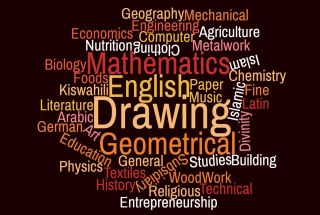
Some of the courses that prepare students for this career