Research, design, develop, or test computer or computer-related equipment for commercial, industrial, military, or scientific use. May supervise the manufacturing and installation of computer or computer-related equipment and components.
1. Update knowledge and skills to keep up with rapid advancements in computer technology.
2. Build, test, and modify product prototypes using working models or theoretical models constructed with computer simulation.
3. Write detailed functional specifications that document the hardware development process and support hardware introduction.
4. Specify power supply requirements and configuration, drawing on system performance expectations and design specifications.
5. Confer with engineering staff and consult specifications to evaluate interface between hardware and software and operational and performance requirements of overall system.
6. Design and develop computer hardware and support peripherals, including central processing units (CPUs), support logic, microprocessors, custom integrated circuits, and printers and disk drives.
7. Select hardware and material, assuring compliance with specifications and product requirements.
8. Monitor functioning of equipment and make necessary modifications to ensure system operates in conformance with specifications.
9. Test and verify hardware and support peripherals to ensure that they meet specifications and requirements, by recording and analyzing test data.
10. Direct technicians, engineering designers or other technical support personnel as needed.
11. Provide technical support to designers, marketing and sales departments, suppliers, engineers and other team members throughout the product development and implementation process.
12. Store, retrieve, and manipulate data for analysis of system capabilities and requirements. Evaluate factors such as reporting formats required, cost constraints, and need for security restrictions to determine hardware configuration.
13. Analyze user needs and recommend appropriate hardware.
Key knowledge areas
The following key knowledge areas help a Computer hardware engineer execute his duties better.
Computers and Electronics — Knowledge of circuit boards, processors, chips, electronic equipment, and computer hardware and software, including applications and programming.
Engineering and Technology — Knowledge of the practical application of engineering science and technology. This includes applying principles, techniques, procedures, and equipment to the design and production of various goods and services.
Design — Knowledge of design techniques, tools, and principles involved in production of precision technical plans, blueprints, drawings, and models.
Mathematics — Knowledge of arithmetic, algebra, geometry, calculus, statistics, and their applications.
Physics — Knowledge and prediction of physical principles, laws, their interrelationships, and applications to understanding fluid, material, and atmospheric dynamics, and mechanical, electrical, atomic and sub- atomic structures and processes.
Skills
The following skills aid a Computer hardware engineer carry out his/her duties with ease ;.
Critical Thinking — Using logic and reasoning to identify the strengths and weaknesses of alternative solutions, conclusions or approaches to problems.
Reading Comprehension — Understanding written sentences and paragraphs in work related documents.
Active Listening — Giving full attention to what other people are saying, taking time to understand the points being made, asking questions as appropriate, and not interrupting at inappropriate times.
Speaking — Talking to others to convey information effectively.
Active Learning — Understanding the implications of new information for both current and future problem-solving and decision-making.
Abilities
Deductive Reasoning — The ability to apply general rules to specific problems to produce answers that make sense.
Inductive Reasoning — The ability to combine pieces of information to form general rules or conclusions (includes finding a relationship among seemingly unrelated events).
Oral Comprehension — The ability to listen to and understand information and ideas presented through spoken words and sentences.
Problem Sensitivity — The ability to tell when something is wrong or is likely to go wrong. It does not involve solving the problem, only recognizing there is a problem.
Written Comprehension — The ability to read and understand information and ideas presented in writing.
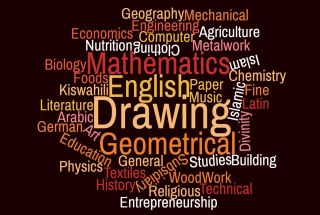
Some of the courses that prepare students for this career