






Quality Control Analyst
Conduct tests to determine quality of raw materials, bulk intermediate and finished products. May conduct stability sample tests to see if they meet the required specifications.
Quality Control Analyst
Daily tasks/Routine activities.
1. Conduct routine and non-routine analyses of in-process materials, raw materials, environmental samples, finished goods, or stability samples.
2. Interpret test results, compare them to established specifications and control limits, and make recommendations on appropriateness of data for release.
3. Perform visual inspections of finished products.
4. Compile laboratory test data and perform appropriate analyses.
5. Complete documentation needed to support testing procedures including data capture forms, equipment logbooks, or inventory forms.
6.Calibrate, validate, or maintain laboratory equipment.
7. Participate in out-of-specification and failure investigations and recommend corrective actions.
8. Supply quality control data necessary for regulatory submissions.
9. Receive and inspect raw materials.
10. Investigate or report questionable test results.
11. Perform validations or transfers of analytical methods in accordance with applicable policies or guidelines.
12. Ensure that lab cleanliness and safety standards are maintained.
Key knowledge areas
These are the major key areas that are relevant to a quality contro analyst;
Chemistry — Knowledge of the chemical composition, structure, and properties of substances and of the chemical processes and transformations that they undergo. This includes uses of chemicals and their interactions, danger signs, production techniques, and disposal methods.
Mathematics — Knowledge of arithmetic, algebra, geometry, calculus, statistics, and their applications.
English Language — Knowledge of the structure and content of the English language including the meaning and spelling of words, rules of composition, and grammar.
Computers and Electronics — Knowledge of circuit boards, processors, chips, electronic equipment, and computer hardware and software, including applications and programming.
Production and Processing — Knowledge of raw materials, production processes, quality control, costs, and other techniques for maximizing the effective manufacture and distribution of goods.
Education and Training — Knowledge of principles and methods for curriculum and training design, teaching and instruction for individuals and groups, and the measurement of training effects.
Skills
The following skills are important for a quality control analyst to execute his/her duties;
Quality Control Analysis — Conducting tests and inspections of products, services, or processes to evaluate quality or performance in order to have improved services and products releases into the market.
Active Listening — Giving full attention to what other people are saying, taking time to understand the points being made, asking questions as appropriate, and not interrupting at inappropriate times.
Reading Comprehension — Understanding written sentences and paragraphs in work related documents.This might happen in terms of information collected from the field after research.
Monitoring — Monitoring/Assessing performance of yourself, other individuals, or organizations to make improvements or take corrective action.
Complex Problem Solving — Identifying complex problems and reviewing related information to develop and evaluate options and implement solutions.
Abilities
Quality Control Analysis — Conducting tests and inspections of products, services, or processes to evaluate quality or performance.
Active Listening — Giving full attention to what other people are saying, taking time to understand the points being made, asking questions as appropriate, and not interrupting at inappropriate times.
Reading Comprehension — Understanding written sentences and paragraphs in work related documents.
Monitoring — Monitoring/Assessing performance of yourself, other individuals, or organizations to make improvements or take corrective action.
Complex Problem Solving — Identifying complex problems and reviewing related information to develop and evaluate options and implement solutions.
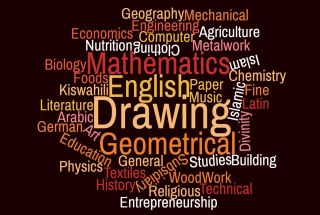
Some of the courses that prepare students for this career
Watch and Listen what the practioneers in your field are saying