


















Aeronautical Engineer
Perform engineering duties in designing, constructing, and testing aircraft, missiles, and spacecraft. May conduct basic and applied research to evaluate adaptability of materials and equipment to aircraft design and manufacture. May recommend improvements in testing equipment and techniques. Sample of reported job titles: Aerospace Engineer, Aerospace Stress Engineer, Avionics Engineer, Design Engineer, Flight Controls Engineer, Flight Test Engineer, Structural Analysis Engineer, Systems Engineer, Test Engineer
Aeronautical Engineer
Daily Taks/Routine activities
1. Formulate mathematical models or other methods of computer analysis to develop, evaluate, or modify design, according to customer engineering requirements.
2. Plan or conduct experimental, environmental, operational, or stress tests on models or prototypes of aircraft or aerospace systems or equipment.
3. Formulate conceptual design of aeronautical or aerospace products or systems to meet customer requirements or conform to environmental regulations.
4. Plan or coordinate activities concerned with investigating and resolving customers' reports of technical problems with aircraft or aerospace vehicles.
5. Write technical reports or other documentation, such as handbooks or bulletins, for use by engineering staff, management, or customers.
6. Direct or coordinate activities of engineering or technical personnel involved in designing, fabricating, modifying, or testing of aircraft or aerospace products.
7. Evaluate product data or design from inspections or reports for conformance to engineering principles, customer requirements, environmental regulations, or quality standards.
8. Develop design criteria for aeronautical or aerospace products or systems, including testing methods, production costs, quality standards, environmental standards, or completion dates.
9. Analyze project requests, proposals, or engineering data to determine feasibility, productibility, cost, or production time of aerospace or aeronautical products.
10. Maintain records of performance reports for future reference.
11. Diagnose performance problems by reviewing performance reports or documentation from customers or field engineers or inspecting malfunctioning or damaged products.
12. Direct aerospace research and development programs.
13. Research new materials to determine quality or conformance to environmental standards.
Key knowledge areas
The following key knowledge areas help a Aeronautical Engineer execute his duties better.
Engineering and Technology — Knowledge of the practical application of engineering science and technology. This includes applying principles, techniques, procedures, and equipment to the design and production of various goods and services.
Mathematics — Knowledge of arithmetic, algebra, geometry, calculus, statistics, and their applications.
Design — Knowledge of design techniques, tools, and principles involved in production of precision technical plans, blueprints, drawings, and models.
Physics — Knowledge and prediction of physical principles, laws, their interrelationships, and applications to understanding fluid, material, and atmospheric dynamics, and mechanical, electrical, atomic and sub- atomic structures and processes.
Computers and Electronics — Knowledge of circuit boards, processors, chips, electronic equipment, and computer hardware and software, including applications and programming.
Skills
The following skills aid a Aeronautical Engineer carry out his duties with ease ;.
Critical Thinking — Using logic and reasoning to identify the strengths and weaknesses of alternative solutions, conclusions or approaches to problems.
Reading Comprehension — Understanding written sentences and paragraphs in work related documents.
Science — Using scientific rules and methods to solve problems.
Active Listening — Giving full attention to what other people are saying, taking time to understand the points being made, asking questions as appropriate, and not interrupting at inappropriate times.
Complex Problem Solving — Identifying complex problems and reviewing related information to develop and evaluate options and implement solutions.
Abilities
Written Comprehension — The ability to read and understand information and ideas presented in writing.
Deductive Reasoning — The ability to apply general rules to specific problems to produce answers that make sense.
Inductive Reasoning — The ability to combine pieces of information to form general rules or conclusions (includes finding a relationship among seemingly unrelated events).
Information Ordering — The ability to arrange things or actions in a certain order or pattern according to a specific rule or set of rules (e.g., patterns of numbers, letters, words, pictures, mathematical operations).
Problem Sensitivity — The ability to tell when something is wrong or is likely to go wrong. It does not involve solving the problem, only recognizing there
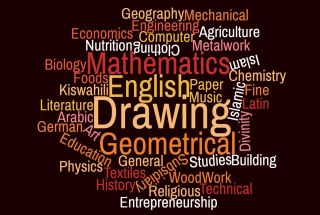
Some of the courses that prepare students for this career
Watch and Listen what the practioneers in your field are saying