


















Industrial Engineer
Design, develop, test, and evaluate integrated systems for managing industrial production processes, including human work factors, quality control, inventory control, logistics and material flow, cost analysis, and production coordination. Sample of reported job titles: Engineer, Engineering Manager, Industrial Engineer, Manufacturing Specialist, Operations Engineer, Plant Engineer, Process Engineer, Production Engineer, Supply Chain Engineer, Tool Engineer
Industrial Engineer
Daily tasks/Routine Activities
1. Plan and establish sequence of operations to fabricate and assemble parts or products and to promote efficient utilization.
2. Review production schedules, engineering specifications, orders, and related information to obtain knowledge of manufacturing methods, procedures, and activities.
3. Estimate production costs, cost saving methods, and the effects of product design changes on expenditures for management review, action, and control.
4. Draft and design layout of equipment, materials, and workspace to illustrate maximum efficiency using drafting tools and computer.
5.Coordinate and implement quality control objectives, activities, or procedures to resolve production problems, maximize product reliability, or minimize costs.
6. Communicate with management and user personnel to develop production and design standards.
7. Recommend methods for improving utilization of personnel, material, and utilities.
8. Develop manufacturing methods, labor utilization standards, and cost analysis systems to promote efficient staff and facility utilization.
9. Confer with clients, vendors, staff, and management personnel regarding purchases, product and production specifications, manufacturing capabilities, or project status.
10. Apply statistical methods and perform mathematical calculations to determine manufacturing processes, staff requirements, and production standards.
11. Study operations sequence, material flow, functional statements, organization charts, and project information to determine worker functions and responsibilities.
12. Complete production reports, purchase orders, and material, tool, and equipment lists.
13. Record or oversee recording of information to ensure currency of engineering drawings and documentation of production problems.
14. Evaluate precision and accuracy of production and testing equipment and engineering drawings to formulate corrective action plan.
15.Analyze statistical data and product specifications to determine standards and establish quality and reliability objectives of finished product.
16. Regulate and alter workflow schedules according to established manufacturing sequences and lead times to expedite production operations.
Key knowledge areas
The following key knowledge areas help an Industrial Engineer execute his duties better.
Engineering and Technology — Knowledge of the practical application of engineering science and technology. This includes applying principles, techniques, procedures, and equipment to the design and production of various goods and services.
Production and Processing — Knowledge of raw materials, production processes, quality control, costs, and other techniques for maximizing the effective manufacture and distribution of goods.
Mathematics — Knowledge of arithmetic, algebra, geometry, calculus, statistics, and their applications.
Mechanical — Knowledge of machines and tools, including their designs, uses, repair, and maintenance.
Design — Knowledge of design techniques, tools, and principles involved in production of precision technical plans, blueprints, drawings, and models.
Skills
The following skills aid a Industrial Engineer carry out his/her duties with ease ;.
Reading Comprehension — Understanding written sentences and paragraphs in work related documents.
Active Listening — Giving full attention to what other people are saying, taking time to understand the points being made, asking questions as appropriate, and not interrupting at inappropriate times.
Complex Problem Solving — Identifying complex problems and reviewing related information to develop and evaluate options and implement solutions.
Critical Thinking — Using logic and reasoning to identify the strengths and weaknesses of alternative solutions, conclusions or approaches to problems.
Writing — Communicating effectively in writing as appropriate for the needs of the audience.
Abilities
Oral Comprehension — The ability to listen to and understand information and ideas presented through spoken words and sentences.
Written Comprehension — The ability to read and understand information and ideas presented in writing.
Oral Expression — The ability to communicate information and ideas in speaking so others will understand.
Problem Sensitivity — The ability to tell when something is wrong or is likely to go wrong. It does not involve solving the problem, only recognizing there is a problem.
Written Expression — The ability to communicate information and ideas in writing so others will understand.
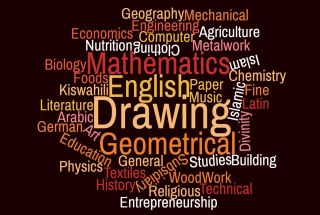
Some of the courses that prepare students for this career
Watch and Listen what the practioneers in your field are saying