








Electrical engineer
Electrical engineers research, design, develop, test, or supervise the manufacturing and installation of electrical equipment, components, or systems for commercial, industrial, military, or scientific use. Sample of reported career titles: Circuits Engineer, Design Engineer, Electrical Controls Engineer, Electrical Design Engineer, Electrical Engineer, Electrical Project Engineer, Instrumentation and Electrical Reliability Engineer (I&E; Reliability Engineer), Power Systems Engineer, Project Engineer, Test Engineer
Electrical engineer
If you are good at maths, science and IT, and you want a career in engineering, this could be an ideal option for you.
For this career you will need to be good at solving problems, structuring your workload and enjoy working as part of a team.
Electrical engineers are involved in projects from the concept and detail of the design, through to implementation, testing and handover. They may be involved in maintenance programmes a well and there work focuses on economy, quality, reliability, safety, and sustainability.
Daily tasks
An electrical engineer, you would work with high and low voltage equipment in a number of areas, including:
1. Transport networks, including rail electrification and signalling
2. Power generation, transmission and distribution
3. Renewable energy sources, such as solar panelling, hydroelectric and wind turbines
manufacturing and construction
4. Building services, such as lighting, heating, ventilation and lift systems.
The exact duties would depend on your industry, but could include:
5. Carrying out feasibility studies for new technical developments
6. Drawing up project plans and circuit diagrams, using computer-assisted engineering and design software
7. Estimating costs and project timescales
8. Coordinating the work of technicians and craftspeople
9. Testing installations and systems, and analysing test data
10. aking sure projects meet safety regulations
11. Overseeing inspection and maintenance programmes
12. Attending meetings, writing reports and giving presentations.
In addition, an electrical engineer would normally work on projects with other professionals, such as civil engineers, architects, engineering technicians and IT staff.
Key Skills, interests and qualities
To be an electrical engineer you will need to have:
1. Excellent maths, science and IT skills
2. The ability to produce and interpret technical diagrams
3. The ability to analyse complex problems and assess possible solutions
4. The ability to explain design ideas clearly
5. Strong decision-making skills
6. Excellent communication skills
7. Good organisational skills
8. The ability to manage a budget
9. Excellent teamworking and people skills
10. A good understanding of electrical health and safety regulations.
Key knowledge areas
1. Engineering and Technology — Knowledge of the practical application of engineering science and technology. This includes applying principles, techniques, procedures, and equipment to the design and production of various goods and services.
2. Computers and Electronics — Knowledge of circuit boards, processors, chips, electronic equipment, and computer hardware and software, including applications and programming.
3. Design — Knowledge of design techniques, tools, and principles involved in production of precision technical plans, blueprints, drawings, and models.
4. Mathematics — Knowledge of arithmetic, algebra, geometry, calculus, statistics, and their applications.
5. English Language — Knowledge of the structure and content of the English language including the meaning and spelling of words, rules of composition, and grammar.
6. Physics — Knowledge and prediction of physical principles, laws, their interrelationships, and applications to understanding fluid, material, and atmospheric dynamics, and mechanical, electrical, atomic and sub- atomic structures and processes.
7. Production and Processing — Knowledge of raw materials, production processes, quality control, costs, and other techniques for maximizing the effective manufacture and distribution of goods.
8. Education and Training — Knowledge of principles and methods for curriculum and training design, teaching and instruction for individuals and groups, and the measurement of training effects.
Courses that Prepare students for this Career
-
The Story of Uganda's Aeronautics Engineer
Know more -
 The Story of Ugandan Innovators
Know more -
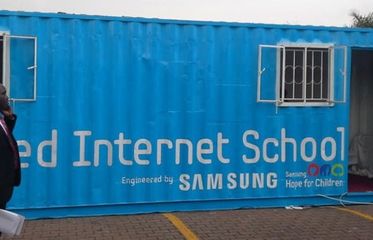 Dawn of a new day for Ugandan Students
Know more -
 The Story of three innovative Makerere Students
Know more -
Female Engineers rising up to the challenge
Know more -
Makerere University championing innovation in the
Know more -
Courses with less graduates to be affected
Know more -
The far one can go to achieve the dream
Know more -
A Brain Child of Makerere University
Know more -
Uganda's Winners from the Thought for Food Global
Know more -
Using steam to generate power
Know more
Watch and Listen what the practioneers in your field are saying
-
 Outbox thinking the way to go
Watch Interview