












Make up artist
Apply makeup to individual clients and performers to reflect period, setting, and situation of their event.Like weddings,photoshoots,etc
Make up artist
Daily tasks/Routine activities
1. Determine map content and layout, as well as production specifications such as scale, size, projection, and colors, and direct production to ensure that specifications are followed.
2. Inspect final compositions to ensure completeness and accuracy.
3. Revise existing maps and charts, making all necessary corrections and adjustments.
4. Compile data required for map preparation, including aerial photographs, survey notes, records, reports, and original maps.
5. Prepare and alter trace maps, charts, tables, detailed drawings, and three-dimensional optical models of terrain using stereoscopic plotting and computer graphics equipment.
6. Delineate aerial photographic detail, such as control points, hydrography, topography, and cultural features, using precision stereo plotting apparatus or drafting instruments.
7. Build and update digital databases.
8. Examine and analyze data from ground surveys, reports, aerial photographs, and satellite images to prepare topographic maps, aerial-photograph mosaics, and related charts.
9. Identify, scale, and orient geodetic points, elevations, and other planimetric or topographic features, applying standard mathematical formulas.
10. Determine guidelines that specify which source material is acceptable for use.
11. Collect information about specific features of the Earth, using aerial photography and other digital remote sensing techniques.
12. Study legal records to establish boundaries of local, national, and international properties.
13. Select aerial photographic and remote sensing techniques and plotting equipment needed to meet required standards of accuracy.
14.Travel over photographed areas to observe, identify, record, and verify all relevant features.
Key Knowledge areas
The following key knowledge areas help a makeup artist execute his duties better.
Computers and Electronics — Knowledge of circuit boards, processors, chips, electronic equipment, and computer hardware and software, including applications and programming.
English Language — Knowledge of the structure and content of the English language including the meaning and spelling of words, rules of composition, and grammar.
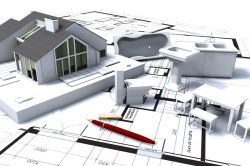
Design — Knowledge of design techniques, tools, and principles involved in production of precision technical plans, blueprints, drawings, and models.
Mathematics — Knowledge of arithmetic, algebra, geometry, calculus, statistics, and their applications.
Skills
The following skills aid a Make-up artist carry out his/her duties with ease ;.
Reading Comprehension — Understanding written sentences and paragraphs in work related documents.
Active Listening — Giving full attention to what other people are saying, taking time to understand the points being made, asking questions as appropriate, and not interrupting at inappropriate times.
Critical Thinking — Using logic and reasoning to identify the strengths and weaknesses of alternative solutions, conclusions or approaches to problems.
Writing — Communicating effectively in writing as appropriate for the needs of the audience.
Active Learning — Understanding the implications of new information for both current and future problem-solving and decision-making.
Abilities
Near Vision — The ability to see details at close range (within a few feet of the observer).
Oral Comprehension — The ability to listen to and understand information and ideas presented through spoken words and sentences.
Oral Expression — The ability to communicate information and ideas in speaking so others will understand.
Written Comprehension — The ability to read and understand information and ideas presented in writing.
Written Expression — The ability to communicate information and ideas in writing so others will understand.
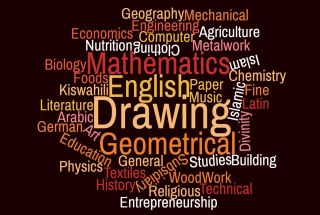
Some of the courses that prepare students for this career
-
Apprenticeship is the proven way for getting excellent workers
Know more -
How to choose the right career path
Know more -
How to draw career inspiration from what you learn in class
Know more -
why you cannot give up now
Know more -
Know more -
Know more -
Know more -
 The 10,000 hours of practice
Know more -
Know more -
Know more -
Know more -
Know more -
Know more -
Valuing today as you visualize tomorrow
Know more -
Jack Ma tells it all
Know more -
Joint courses give graduates edge
Know more -
Sports can boost your confidence
Know more -
Know more
Watch and Listen what the practioneers in your field are saying