










Photographer
Photograph people, landscapes, merchandise, or other subjects, using digital or film cameras and equipment. May develop negatives or use computer software to produce finished images and prints. Includes scientific photographers, aerial photographers, and photojournalists.
Photographer
Daily tasks/Routine activities
1. Determine desired images and picture composition, selecting and adjusting subjects, equipment, and lighting to achieve desired effects.
2. Adjust apertures, shutter speeds, and camera focus based on a combination of factors such as lighting, field depth, subject motion, film type, and film speed.
3. Create artificial light, using flashes and reflectors.
4. Manipulate and enhance scanned or digital images to create desired effects, using computers and specialized software.
5. Transfer photographs to computers for editing, archiving, and electronic transmission.
6. Determine project goals, locations, and equipment needs by studying assignments and consulting with clients or advertising staff.
7. Review sets of photographs to select the best work.
8. Perform general office duties such as scheduling appointments, keeping books, and ordering supplies.
9. Estimate or measure light levels, distances, and numbers of exposures needed, using measuring devices and formulas.
10. Test equipment prior to use to ensure that it is in good working order.
11. Set up, mount, or install photographic equipment and cameras.
12. Select and assemble equipment and required background properties, according to subjects, materials, and conditions.
13. Take pictures of individuals, families, and small groups, either in studio or on location.
14. Direct activities of workers who are setting up photographic equipment.
15.Perform maintenance tasks necessary to keep equipment working properly.
Key knowledge areas
The following key knowledge areas help a Photographer execute his duties better.
Customer and Personal Service — Knowledge of principles and processes for providing customer and personal services. This includes customer needs assessment, meeting quality standards for services, and evaluation of customer satisfaction.
Sales and Marketing — Knowledge of principles and methods for showing, promoting, and selling products or services. This includes marketing strategy and tactics, product demonstration, sales techniques, and sales control systems.
Computers and Electronics — Knowledge of circuit boards, processors, chips, electronic equipment, and computer hardware and software, including applications and programming.
Fine Arts — Knowledge of the theory and techniques required to compose, produce, and perform works of music, dance, visual arts, drama, and sculpture.
English Language — Knowledge of the structure and content of the English language including the meaning and spelling of words, rules of composition, and grammar.
Skills
The following skills aid a Photographer carry out his/her duties with ease
Active Listening — Giving full attention to what other people are saying, taking time to understand the points being made, asking questions as appropriate, and not interrupting at inappropriate times.
Speaking — Talking to others to convey information effectively.
Service Orientation — Actively looking for ways to help people.
Social Perceptiveness — Being aware of others' reactions and understanding why they react as they do.
Active Learning — Understanding the implications of new information for both current and future problem-solving and decision-making.
Abilities
Oral Comprehension — The ability to listen to and understand information and ideas presented through spoken words and sentences.
Oral Expression — The ability to communicate information and ideas in speaking so others will understand.
Originality — The ability to come up with unusual or clever ideas about a given topic or situation, or to develop creative ways to solve a problem.
Visualization — The ability to imagine how something will look after it is moved around or when its parts are moved or rearranged.
Far Vision — The ability to see details at a distance.
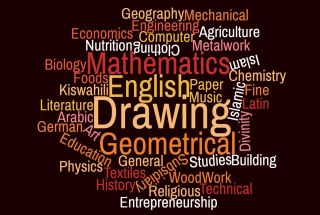
Some of the courses that prepare students for this career
-
Apprenticeship is the proven way for getting excellent workers
Know more -
Finding a Career in Photography
Know more -
How to choose the right career path
Know more -
How to draw career inspiration from what you learn in class
Know more -
why you cannot give up now
Know more -
Know more -
Know more -
Know more -
 The 10,000 hours of practice
Know more -
Know more -
Know more -
Know more -
Know more -
Know more -
Valuing today as you visualize tomorrow
Know more -
Jack Ma tells it all
Know more -
Joint courses give graduates edge
Know more -
Sports can boost your confidence
Know more
Watch and Listen what the practioneers in your field are saying