
















Logistics Manager
Plan, direct, or coordinate purchasing, warehousing, distribution, forecasting, customer service, or planning services. Manage logistics personnel and logistics systems and direct daily operations.
Logistics Manager
Daily tasks/Routine activities
1. Resolve problems concerning transportation, logistics systems, imports or exports, or customer issues.
2. Collaborate with other departments to integrate logistics with business systems or processes, such as customer sales, order management, accounting, or shipping.
3. Maintain metrics, reports, process documentation, customer service logs, or training or safety records.
4. Supervise the work of logistics specialists, planners, or schedulers.
5. Direct inbound or outbound logistics operations, such as transportation or warehouse activities, safety performance, or logistics quality management.
6. Direct or coordinate comprehensive logistical or reverse logistical functions for product life cycles, including acquisition, distribution, internal allocation, delivery, recycling, reuse, or final disposal of resources.
7. Negotiate with suppliers or customers to improve supply chain efficiency or sustainability.
8. Direct distribution center operation to ensure achievement of cost, productivity, accuracy, or timeliness objectives.
9. Negotiate transportation rates or services.
10. Analyze the financial impact of proposed logistics changes, such as routing, shipping modes, product volumes or mixes, or carriers.
11. Recommend optimal transportation modes, routing, equipment, or frequency.
12. Monitor product import or export processes to ensure compliance with regulatory or legal requirements.
13. Participate in carrier management processes, such as selection, qualification, or performance evaluation.
14. Develop risk management programs to ensure continuity of supply in emergency scenarios.
15. Plan or implement improvements to internal or external logistics systems or processes.
Key knowledge areas.
English Language — Knowledge of the structure and content of the English language including the meaning and spelling of words, rules of composition, and grammar.
Production and Processing — Knowledge of raw materials, production processes, quality control, costs, and other techniques for maximizing the effective manufacture and distribution of goods.
Customer and Personal Service — Knowledge of principles and processes for providing customer and personal services. This includes customer needs assessment, meeting quality standards for services, and evaluation of customer satisfaction.
Personnel and Human Resources — Knowledge of principles and procedures for personnel recruitment, selection, training, compensation and benefits, labor relations and negotiation, and personnel information systems.
Economics and Accounting — Knowledge of economic and accounting principles and practices, the financial markets, banking and the analysis and reporting of financial data.
Education and Training — Knowledge of principles and methods for curriculum and training design, teaching and instruction for individuals and groups, and the measurement of training effects.
Skills
Monitoring — Monitoring/Assessing performance of yourself, other individuals, or organizations to make improvements or take corrective action.
Speaking — Talking to others to convey information effectively.
Writing — Communicating effectively in writing as appropriate for the needs of the audience.
Coordination — Adjusting actions in relation to others' actions.
Management of Personnel Resources — Motivating, developing, and directing people as they work, identifying the best people for the job.
Negotiation — Bringing others together and trying to reconcile differences.
Active Learning — Understanding the implications of new information for both current and future problem-solving and decision-making.
Persuasion — Persuading others to change their minds or behavior.
Abilities
Category Flexibility — The ability to generate or use different sets of rules for combining or grouping things in different ways.
Inductive Reasoning — The ability to combine pieces of information to form general rules or conclusions (includes finding a relationship among seemingly unrelated events).
Speech Clarity — The ability to speak clearly so others can understand you.
Information Ordering — The ability to arrange things or actions in a certain order or pattern according to a specific rule or set of rules (e.g., patterns of numbers, letters, words, pictures, mathematical operations).
Mathematical Reasoning — The ability to choose the right mathematical methods or formulas to solve a problem.
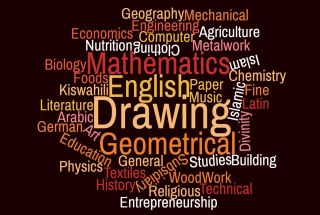
Some of the courses that prepare students for this career
-
Apprenticeship is the proven way for getting excellent workers
Know more -
How to choose the right career path
Know more -
How to draw career inspiration from what you learn in class
Know more -
why you cannot give up now
Know more -
Know more -
Know more -
Know more -
 The 10,000 hours of practice
Know more -
Know more -
Know more -
Know more -
Know more -
Know more -
Valuing today as you visualize tomorrow
Know more -
Jack Ma tells it all
Know more -
Joint courses give graduates edge
Know more -
Sports can boost your confidence
Know more
Watch and Listen what the practioneers in your field are saying