







Data entrant
Enters data into computers using variety of software programmes and checks for the data accuracy.
Data entrant
Daily tasks/routine activities.
1. Read source documents such as canceled checks, sales reports, or bills, and enter data in specific data fields or onto tapes or disks for subsequent entry, using keyboards or scanners.
2. Compile, sort and verify the accuracy of data before it is entered.
3. Compare data with source documents, or re-enter data in verification format to detect errors.
4. Store completed documents in appropriate locations.
5. Locate and correct data entry errors, or report them to supervisors.
6. Maintain logs of activities and completed work.
7. Select materials needed to complete work assignments.
Key knowledge areas
Customer and Personal Service — Knowledge of principles and processes for providing customer and personal services. This includes customer needs assessment, meeting quality standards for services, and evaluation of customer satisfaction.
Mathematics — Knowledge of arithmetic, algebra, geometry, calculus, statistics, and their applications.
English Language — Knowledge of the structure and content of the English language including the meaning and spelling of words, rules of composition, and grammar.
Computers and Electronics — Knowledge of circuit boards, processors, chips, electronic equipment, and computer hardware and software, including applications and programming
Administration and Management — Knowledge of business and management principles involved in strategic planning, resource allocation, human resources modeling, leadership technique, production methods, and coordination of people and resources.
Skills and Abilities
Active Listening — Giving full attention to what other people are saying, taking time to understand the points being made, asking questions as appropriate, and not interrupting at inappropriate times.
Monitoring — Monitoring/Assessing performance of yourself, other individuals, or organizations to make improvements or take corrective action.
Reading Comprehension — Understanding written sentences and paragraphs in work related documents.
Oral Comprehension — The ability to listen to and understand information and ideas presented through spoken words and sentences.
Oral Expression — The ability to communicate information and ideas in speaking so others will understand.
Written Comprehension — The ability to read and understand information and ideas presented in writing.
Speech Clarity — The ability to speak clearly so others can understand you.
Speech Recognition — The ability to identify and understand the speech of another person.
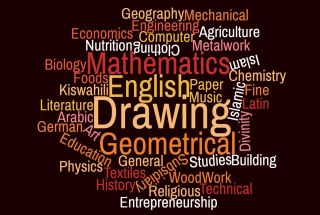
Some of the courses that prepare students for this career
Watch and Listen what the practioneers in your field are saying