Plan, direct, or coordinate one or more administrative services of an organization, such as records and performs routine management duties that enable employers to attend to other matters.
The following are the daily tasks that usually occupy a business administrator;
1. Direct or coordinate the supportive services department of a business, agency, or organization.
2. Prepare and review operational reports and schedules to ensure accuracy and efficiency.
3. Set goals and deadlines for the department.
4. Acquire, distribute and store supplies.
5. Analyze internal processes and recommend and implement procedural or policy changes to improve operations, such as supply changes or the disposal of records.
6. Plan, administer, and control budgets for contracts, equipment, and supplies.
7. Monitor the facility to ensure that it remains safe, secure, and well-maintained.
8. Hire and terminate clerical and administrative personnel.
9. Oversee the maintenance and repair of machinery, equipment, and electrical and mechanical systems.
10. Oversee construction and renovation projects to improve efficiency and to ensure that facilities meet environmental, health, and security standards, and comply with government regulations.
11. Conduct classes to teach procedures to staff.
12. Participate in architectural and engineering planning and design, including space and installation management.
Key knowledge areas
The followinfg are the key knowledge areas that are relevant to a business administrator.
Clerical — Knowledge of administrative and clerical procedures and systems such as word processing, managing files and records, stenography and transcription, designing forms, and other office procedures and terminology.
Customer and Personal Service — Knowledge of principles and processes for providing customer and personal services. This includes customer needs assessment, meeting quality standards for services, and evaluation of customer satisfaction.
English Language — Knowledge of the structure and content of the English language including the meaning and spelling of words, rules of composition, and grammar.
Administration and Management — Knowledge of business and management principles involved in strategic planning, resource allocation, human resources modeling, leadership technique, production methods, and coordination of people and resources.
Personnel and Human Resources — Knowledge of principles and procedures for personnel recruitment, selection, training, compensation and benefits, labor relations and negotiation, and personnel information systems.
Computers and Electronics — Knowledge of circuit boards, processors, chips, electronic equipment, and computer hardware and software, including applications and programming.
Economics and Accounting — Knowledge of economic and accounting principles and practices, the financial markets, banking and the analysis and reporting of financial data.
Mathematics — Knowledge of arithmetic, algebra, geometry, calculus, statistics, and their applications.
Sales and Marketing — Knowledge of principles and methods for showing, promoting, and selling products or services. This includes marketing strategy and tactics, product demonstration, sales techniques, and sales control systems.
Skills and Abilities
Clerical — Knowledge of administrative and clerical procedures and systems such as word processing, managing files and records, stenography and transcription, designing forms, and other office procedures and terminology.
Customer and Personal Service — Knowledge of principles and processes for providing customer and personal services. This includes customer needs assessment, meeting quality standards for services, and evaluation of customer satisfaction.
English Language — Knowledge of the structure and content of the English language including the meaning and spelling of words, rules of composition, and grammar.
Administration and Management — Knowledge of business and management principles involved in strategic planning, resource allocation, human resources modeling, leadership technique, production methods, and coordination of people and resources.
Personnel and Human Resources — Knowledge of principles and procedures for personnel recruitment, selection, training, compensation and benefits, labor relations and negotiation, and personnel information systems.
Computers and Electronics — Knowledge of circuit boards, processors, chips, electronic equipment, and computer hardware and software, including applications and programming.
Economics and Accounting — Knowledge of economic and accounting principles and practices, the financial markets, banking and the analysis and reporting of financial data.
Mathematics — Knowledge of arithmetic, algebra, geometry, calculus, statistics, and their applications.
Sales and Marketing — Knowledge of principles and methods for showing, promoting, and selling products or services. This includes marketing strategy and tactics, product demonstration, sales techniques, and sales control systems.
Speaking — Talking to others to convey information effectively.This builds confiedence to the administrators as well as the subordinates towards their leader.
Active Listening — Giving full attention to what other people are saying, taking time to understand the points being made, asking questions as appropriate, and not interrupting at inappropriate times.Active listening makes a good leader for its from it that feedback is fully derived.
Coordination — Adjusting actions in relation to others' actions which improves flexibility around the work environment.
Time Management — Managing one's own time and the time of others.
Writing — Communicating effectively in writing as appropriate for the needs of the audience.
Critical Thinking — Using logic and reasoning to identify the strengths and weaknesses of alternative solutions, conclusions or approaches to problems.
Negotiation — Bringing others together and trying to reconcile differences.
Judgment and Decision Making — Considering the relative costs and benefits of potential actions to choose the most appropriate one.
Management of Personnel Resources — Motivating, developing, and directing people as they work, identifying the best people for the job.
Social Perceptiveness — Being aware of others' reactions and understanding why they react as they do.
Monitoring — Monitoring/Assessing performance of yourself, other individuals, or organizations to make improvements or take corrective action.
Service Orientation — Actively looking for ways to help people.
Active Learning — Understanding the implications of new information for both current and future problem-solving and decision-making.
Complex Problem Solving — Identifying complex problems and reviewing related information to develop and evaluate options and implement solutions.
Instructing — Teaching others how to do something.
Systems Analysis — Determining how a system should work and how changes in conditions, operations, and the environment will affect outcomes.
Persuasion — Persuading others to change their minds or behavior.
Oral Comprehension — The ability to listen to and understand information and ideas presented through spoken words and sentences.
Oral Expression — The ability to communicate information and ideas in speaking so others will understand.
Written Comprehension — The ability to read and understand information and ideas presented in writing.
Written Expression — The ability to communicate information and ideas in writing so others will understand.
Problem Sensitivity — The ability to tell when something is wrong or is likely to go wrong. It does not involve solving the problem, only recognizing there is a problem.
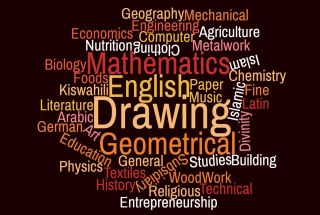
Some of the courses that prepare students for this career
Noah Walakira, the 23 year old CEO of Namirembe Sweater MakersCreativity is key in solving youth unemployment Know more
Watch and Listen what the practioneers in your field are saying
Meet Hope Kayeny,a young C.E.O who has built a fast growing beauty company without a loanWhen necessity is the sure mother of innovation Watch Interview
Careers that are in the same career field as Business Administrator








 Creativity is key in solving youth unemployment