














Hospital administrator
Plans, directs, or coordinates medical and health services in hospitals, clinics, manages care organizations, public health agencies, or similar organizations and oversees the administrative running of medical centers.
Hospital administrator
Daily tasks/Routine activities
1. Conduct and administer fiscal operations, including accounting, planning budgets, authorizing expenditures, establishing rates for services, and coordinating financial reporting.
2. Direct, supervise and evaluate work activities of medical, nursing, technical, clerical, service, maintenance, and other personnel.
3. Maintain communication between governing boards, medical staff, and department heads by attending board meetings and coordinating interdepartmental functioning.
4. Review and analyze facility activities and data to aid planning and cash and risk management and to improve service utilization.
5. Plan, implement and administer programs and services in a health care or medical facility, including personnel administration, training, and coordination of medical, nursing and physical plant staff.
6. Direct or conduct recruitment, hiring and training of personnel.
7. Establish work schedules and assignments for staff, according to workload, space and equipment availability.
8. Maintain awareness of advances in medicine, computerized diagnostic and treatment equipment, data processing technology, government regulations, health insurance changes, and financing options.
9. Monitor the use of diagnostic services, inpatient beds, facilities, and staff to ensure effective use of resources and assess the need for additional staff, equipment, and services.
10. Develop and maintain computerized record management systems to store and process data such as personnel activities and information, and to produce reports.
Key Knowledge areas
English Language — Knowledge of the structure and content of the English language including the meaning and spelling of words, rules of composition, and grammar for easy communication with clients in a more common language.
Personnel and Human Resources — Knowledge of principles and procedures for personnel recruitment, selection, training, compensation and benefits, labor relations and negotiation, and personnel information systems.
Medicine and Dentistry — Knowledge of the information and techniques needed to diagnose and treat human injuries, diseases, and deformities. This includes symptoms, treatment alternatives, drug properties and interactions, and preventive health-care measures.
Psychology — Knowledge of human behavior and performance; individual differences in ability, personality, and interests; learning and motivation; psychological research methods; and the assessment and treatment of behavioral and affective disorders.
Education and Training — Knowledge of principles and methods for curriculum and training design, teaching and instruction for individuals and groups, and the measurement of training effects.
Clerical — Knowledge of administrative and clerical procedures and systems such as word processing, managing files and records, stenography and transcription, designing forms, and other office procedures and terminology.
Communications and Media — Knowledge of media production, communication, and dissemination techniques and methods. This includes alternative ways to inform and entertain via written, oral, and visual media.
Sociology and Anthropology — Knowledge of group behavior and dynamics, societal trends and influences, human migrations, ethnicity, cultures and their history and origins.
Skills and Abilities
Critical Thinking — Using logic and reasoning to identify the strengths and weaknesses of alternative solutions, conclusions or approaches to problems.
Judgment and Decision Making — Considering the relative costs and benefits of potential actions to choose the most appropriate one.
Coordination — Adjusting actions in relation to others' actions.
Management of Personnel Resources — Motivating, developing, and directing people as they work, identifying the best people for the job.
Complex Problem Solving — Identifying complex problems and reviewing related information to develop and evaluate options and implement solutions.
Instructing — Teaching others how to do something.
Monitoring — Monitoring/Assessing performance of yourself, other individuals, or organizations to make improvements or take corrective action.
Systems Analysis — Determining how a system should work and how changes in conditions, operations, and the environment will affect outcomes.
Systems Evaluation — Identifying measures or indicators of system performance and the actions needed to improve or correct performance, relative to the goals of the system.
Negotiation — Bringing others together and trying to reconcile differences.
Operations Analysis — Analyzing needs and product requirements to create a design.
Management of Financial Resources — Determining how money will be spent to get the work done, and accounting for these expenditures.
Management of Material Resources — Obtaining and seeing to the appropriate use of equipment, facilities, and materials needed to do certain work.
Science — Using scientific rules and methods to solve problems.
Oral Comprehension — The ability to listen to and understand information and ideas presented through spoken words and sentences.
Oral Expression — The ability to communicate information and ideas in speaking so others will understand.
Problem Sensitivity — The ability to tell when something is wrong or is likely to go wrong. It does not involve solving the problem, only recognizing there is a problem.
Written Comprehension — The ability to read and understand information and ideas presented in writing.
Written Expression — The ability to communicate information and ideas in writing so others will understand.
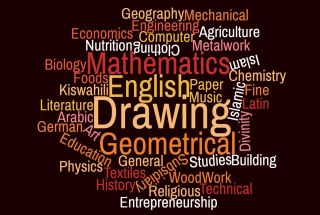
Some of the courses that prepare students for this career
-
Apprenticeship is the proven way for getting excellent workers
Know more -
How to choose the right career path
Know more -
How to draw career inspiration from what you learn in class
Know more -
why you cannot give up now
Know more -
Know more -
Know more -
Know more -
 The 10,000 hours of practice
Know more -
Know more -
Know more -
Know more -
Know more -
Know more -
Valuing today as you visualize tomorrow
Know more -
Jack Ma tells it all
Know more -
Joint courses give graduates edge
Know more -
Sports can boost your confidence
Know more
Watch and Listen what the practioneers in your field are saying