
















Aircraft Maintenance Engineer
An Aircraft Maintenance Engineer (AME) is responsible for the release (certification) of an aircraft after maintenance, inspection, repair or modification
Aircraft Maintenance Engineer
An Aircraft Maintenance Engineer (AME) is responsible for the release (certification) of an aircraft after maintenance, inspection, repair or modification
Also known as: Aircraft Maintenance Director, Aircraft Maintenance Supervisor, Aircraft Maintenance Technician (Aircraft Maintenance Tech), Aircraft Mechanic, Aircraft Restorer, Aircraft Technician, Airframe and Powerplant Mechanic (A and P Mechanic), Aviation Maintenance Technician (AMT), Aviation Mechanic, Helicopter Mechanic
Daily / Routine Activities
1. Examine and inspect aircraft components, including landing gear, hydraulic systems, and deicers to locate cracks, breaks, leaks, or other problems.
2. Conduct routine and special inspections as required by regulations.
3. Inspect completed work to certify that maintenance meets standards and that aircraft are ready for operation.
4. Read and interpret maintenance manuals, service bulletins, and other specifications to determine the feasibility and method of repairing or replacing malfunctioning or damaged components.
5. Maintain repair logs, documenting all preventive and corrective aircraft maintenance.
6. Modify aircraft structures, space vehicles, systems, or components, following drawings, schematics, charts, engineering orders, and technical publications.
7. Inspect airframes for wear or other defects.
8. Maintain, repair, and rebuild aircraft structures, functional components, and parts such as wings and fuselage, rigging, hydraulic units, oxygen systems, fuel systems, electrical systems, gaskets, and seals.
9. Read and interpret pilots' descriptions of problems to diagnose causes.
10. Reassemble engines following repair or inspection and reinstall engines in aircraft.
Key knowledge areas
These are some of the key knowledge areas for anyone who wants to practice as an Aircraft Maintenance Engineer
Mechanical — Knowledge of machines and tools, including their designs, uses, repair, and maintenance.
English Language — Knowledge of the structure and content of the English language including the meaning and spelling of words, rules of composition, and grammar.
Engineering and Technology — Knowledge of the practical application of engineering science and technology. This includes applying principles, techniques, procedures, and equipment to the design and production of various goods and services.
Customer and Personal Service — Knowledge of principles and processes for providing customer and personal services. This includes customer needs assessment, meeting quality standards for services, and evaluation of customer satisfaction.
Mathematics — Knowledge of arithmetic, algebra, geometry, calculus, statistics, and their applications.
Top skills
These are top skills that one must perfect to practice as an Aircraft Maintenance Engineer
Equipment Maintenance — Performing routine maintenance on equipment and determining when and what kind of maintenance is needed.
Repairing — Repairing machines or systems using the needed tools.
Operation Monitoring — Watching gauges, dials, or other indicators to make sure a machine is working properly.
Troubleshooting — Determining causes of operating errors and deciding what to do about it.
Complex Problem Solving — Identifying complex problems and reviewing related information to develop and evaluate options and implement solutions.
Critical Thinking — Using logic and reasoning to identify the strengths and weaknesses of alternative solutions, conclusions or approaches to problems.
Quality Control Analysis — Conducting tests and inspections of products, services, or processes to evaluate quality or performance.
Reading Comprehension — Understanding written sentences and paragraphs in work related documents.
Monitoring — Monitoring/Assessing performance of yourself, other individuals, or organizations to make improvements or take corrective action.
Operation and Control — Controlling operations of equipment or systems.
Speaking — Talking to others to convey information effectively.
Active Listening — Giving full attention to what other people are saying, taking time to understand the points being made, asking questions as appropriate, and not interrupting at inappropriate times.
Equipment Selection — Determining the kind of tools and equipment needed to do a job.
Judgment and Decision Making — Considering the relative costs and benefits of potential actions to choose the most appropriate one.
Systems Analysis — Determining how a system should work and how changes in conditions, operations, and the environment will affect outcomes.
Active Learning — Understanding the implications of new information for both current and future problem-solving and decision-making.
Coordination — Adjusting actions in relation to others' actions.
Instructing — Teaching others how to do something.
Key Abilities
Control Precision — The ability to quickly and repeatedly adjust the controls of a machine or a vehicle to exact positions.
Finger Dexterity — The ability to make precisely coordinated movements of the fingers of one or both hands to grasp, manipulate, or assemble very small objects.
Information Ordering — The ability to arrange things or actions in a certain order or pattern according to a specific rule or set of rules (e.g., patterns of numbers, letters, words, pictures, mathematical operations).
Problem Sensitivity — The ability to tell when something is wrong or is likely to go wrong. It does not involve solving the problem, only recognizing there is a problem.
Written Comprehension — The ability to read and understand information and ideas presented in writing.
Arm-Hand Steadiness — The ability to keep your hand and arm steady while moving your arm or while holding your arm and hand in one position.
Manual Dexterity — The ability to quickly move your hand, your hand together with your arm, or your two hands to grasp, manipulate, or assemble objects.
Near Vision — The ability to see details at close range (within a few feet of the observer).
Deductive Reasoning — The ability to apply general rules to specific problems to produce answers that make sense.
Inductive Reasoning — The ability to combine pieces of information to form general rules or conclusions (includes finding a relationship among seemingly unrelated events).
Multilimb Coordination — The ability to coordinate two or more limbs (for example, two arms, two legs, or one leg and one arm) while sitting, standing, or lying down. It does not involve performing the activities while the whole body is in motion.
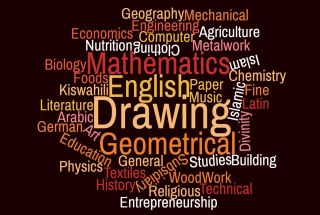
Some of the courses that prepare students for this career
-
Apprenticeship is the proven way for getting excellent workers
Know more -
How to choose the right career path
Know more -
How to draw career inspiration from what you learn in class
Know more -
why you cannot give up now
Know more -
Know more -
Know more -
Know more -
 The 10,000 hours of practice
Know more -
Know more -
Know more -
Know more -
Know more -
Know more -
Valuing today as you visualize tomorrow
Know more -
Jack Ma tells it all
Know more -
Joint courses give graduates edge
Know more -
Sports can boost your confidence
Know more -
 There are more than three job opportunities in a given profession that one can take advantage of.
Know more
Watch and Listen what the practioneers in your field are saying