

















Furniture mover
Move furniture andother materials to and from storage or production areas, loading docks, delivery vehicles, ships, or containers, by hand or using trucks, tractors, or other equipment.
Furniture mover
Daily tasks/Routine activities
1. Sort cargo before loading and unloading.
2. Attach identifying tags to containers or mark them with identifying information.
3. Read work orders or receive oral instructions to determine work assignments or material or equipment needs.
4. Stack cargo in locations such as transit sheds or in holds of ships as directed, using pallets or cargo boards.
5. Record numbers of units handled or moved, using daily production sheets or work tickets.
6. Install protective devices, such as bracing, padding, or strapping, to prevent shifting or damage to items being transported.
7. Direct spouts and position receptacles, such as bins, carts, or containers so they can be loaded.
8. Attach slings, hooks, or other devices to lift cargo and guide loads.
9. Maintain equipment storage areas to ensure that inventory is protected.
10. Adjust controls to guide, position, or move equipment, such as cranes, booms, or cameras.
11. Guide loads being lifted to prevent swinging.
12. Wash out cargo containers or storage areas.
13. Pack containers and re-pack damaged containers.
14. Carry needed tools or supplies from storage or trucks and return them after use.
Key knowledge areas
The following knowledge areas enable afurniture mover execute his duties better;
Static Strength — The ability to exert maximum muscle force to lift, push, pull, or carry objects.
Multi limb Coordination — The ability to coordinate two or more limbs (for example, two arms, two legs, or one leg and one arm) while sitting, standing, or lying down. It does not involve performing the activities while the whole body is in motion.
Trunk Strength — The ability to use your abdominal and lower back muscles to support part of the body repeatedly or continuously over time without 'giving out' or fatiguing.
Control Precision — The ability to quickly and repeatedly adjust the controls of a machine or a vehicle to exact positions.
Manual Dexterity — The ability to quickly move your hand, your hand together with your arm, or your two hands to grasp, manipulate, or assemble objects.
Skills
These skills are very important for a furniture mover to have;
Oral Comprehension — The ability to listen to and understand information and ideas presented through spoken words and sentences.
Stamina — The ability to exert yourself physically over long periods of time without getting winded or out of breath.
Deductive Reasoning — The ability to apply general rules to specific problems to produce answers that make sense.
Dynamic Strength — The ability to exert muscle force repeatedly or continuously over time. This involves muscular endurance and resistance to muscle fatigue.
Abilities
Extent Flexibility — The ability to bend, stretch, twist, or reach with your body, arms, and/or legs.
Far Vision — The ability to see details at a distance.
Problem Sensitivity — The ability to tell when something is wrong or is likely to go wrong. It does not involve solving the problem, only recognizing there is a problem.
Speech Recognition — The ability to identify and understand the speech of another person.This helps him to get clear instructions on directions and placements.
Written Comprehension — The ability to read and understand information and ideas presented in writing
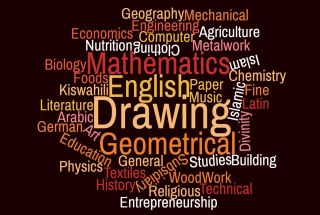
Some of the courses that prepare students for this career
-
Apprenticeship is the proven way for getting excellent workers
Know more -
How to choose the right career path
Know more -
How to draw career inspiration from what you learn in class
Know more -
why you cannot give up now
Know more -
Know more -
Know more -
Know more -
 The 10,000 hours of practice
Know more -
Know more -
Know more -
Know more -
Know more -
Know more -
Valuing today as you visualize tomorrow
Know more -
Jack Ma tells it all
Know more -
Joint courses give graduates edge
Know more -
Sports can boost your confidence
Know more -
 There are more than three job opportunities in a given profession that one can take advantage of.
Know more
Watch and Listen what the practioneers in your field are saying