












Police Patrol Member
Patrol assigned area to enforce laws and ordinances, regulate traffic, control crowds, prevent crime, and arrest violators.
Police Patrol Member
Daily tasks/Routine activities
1. Provide for public safety by maintaining order, responding to emergencies, protecting people and property, enforcing motor vehicle and criminal laws, and promoting good community relations.
2. Record facts to prepare reports that document incidents and activities.
3. Monitor, note, report, and investigate suspicious persons and situations, safety hazards, and unusual or illegal activity in patrol area.
4. Identify, pursue, and arrest suspects and perpetrators of criminal acts.
5. Patrol specific area on foot, horseback, or motorized conveyance, responding promptly to calls for assistance.
6. Review facts of incidents to determine if criminal act or statute violations were involved.
7. Render aid to accident victims and other persons requiring first aid for physical injuries.
8. Investigate traffic accidents and other accidents to determine causes and to determine if a crime has been committed.
9. Testify in court to present evidence or act as witness in traffic and criminal cases.
10. Photograph or draw diagrams of crime or accident scenes and interview principals and eyewitnesses.
11. Relay complaint and emergency-request information to appropriate agency dispatchers.
12. Evaluate complaint and emergency-request information to determine response requirements.
13. Process prisoners, and prepare and maintain records of prisoner bookings and prisoner status during booking and pre-trial process.
Key knowledge areas
The following key knowledge areas help a Police Patrol Member execute his duties better.
Public Safety and Security — Knowledge of relevant equipment, policies, procedures, and strategies to promote effective local, state, or national security operations for the protection of people, data, property, and institutions.
Law and Government — Knowledge of laws, legal codes, court procedures, precedents, government regulations, executive orders, agency rules, and the democratic political process.
English Language — Knowledge of the structure and content of the English language including the meaning and spelling of words, rules of composition, and grammar.
Psychology — Knowledge of human behavior and performance; individual differences in ability, personality, and interests; learning and motivation; psychological research methods; and the assessment and treatment of behavioral and affective disorders.
Customer and Personal Service — Knowledge of principles and processes for providing customer and personal services. This includes customer needs assessment, meeting quality standards for services, and evaluation of customer satisfaction.
Skills
The following skills aid a Police Patrol Member carry out his/her duties with ease ;.
Active Listening — Giving full attention to what other people are saying, taking time to understand the points being made, asking questions as appropriate, and not interrupting at inappropriate times.
Critical Thinking — Using logic and reasoning to identify the strengths and weaknesses of alternative solutions, conclusions or approaches to problems.
Monitoring — Monitoring/Assessing performance of yourself, other individuals, or organizations to make improvements or take corrective action.
Social Perceptiveness — Being aware of others' reactions and understanding why they react as they do.
Speaking — Talking to others to convey information effectively.
Abilities
Problem Sensitivity — The ability to tell when something is wrong or is likely to go wrong. It does not involve solving the problem, only recognizing there is a problem.
Oral Expression — The ability to communicate information and ideas in speaking so others will understand.
Deductive Reasoning — The ability to apply general rules to specific problems to produce answers that make sense.
Inductive Reasoning — The ability to combine pieces of information to form general rules or conclusions (includes finding a relationship among seemingly unrelated events).
Oral Comprehension — The ability to listen to and understand information and ideas presented through spoken words and sentences.
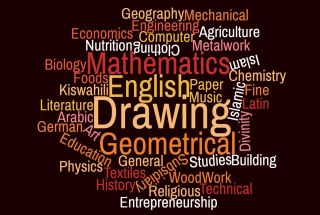
Some of the courses that prepare students for this career
-
Apprenticeship is the proven way for getting excellent workers
Know more -
How to choose the right career path
Know more -
How to draw career inspiration from what you learn in class
Know more -
why you cannot give up now
Know more -
Know more -
Know more -
Know more -
 The 10,000 hours of practice
Know more -
Know more -
Know more -
Know more -
Know more -
Know more -
Valuing today as you visualize tomorrow
Know more -
Jack Ma tells it all
Know more -
Joint courses give graduates edge
Know more -
Sports can boost your confidence
Know more -
 There are more than three job opportunities in a given profession that one can take advantage of.
Know more
Watch and Listen what the practioneers in your field are saying