















Political scientist
Study the origin, development, and operation of political systems. May study topics, such as public opinion, political decision-making, and ideology.They also analyze the structure and operation of governments, as well as various political entities. May conduct public opinion surveys, analyze election results, or analyze public documents.
Political scientist
Daily tasks/Routine activities
1. Teach political science.
2. Disseminate research results through academic publications, written reports, or public presentations.
3. Identify issues for research and analysis.
4. Develop and test theories, using information from interviews, newspapers, periodicals, case law, historical papers, polls, or statistical sources.
5. Maintain current knowledge of government policy decisions.
6. Collect, analyze, and interpret data such as election results and public opinion surveys, reporting on findings, recommendations, and conclusions.
7. Interpret and analyze policies, public issues, legislation, or the operations of governments, businesses, and organizations.
8. Evaluate programs and policies, and make related recommendations to institutions and organizations.
9.Write drafts of legislative proposals, and prepare speeches, correspondence, and policy papers for governmental use.
Key Knowledge areas
The following key areas are relevant to a political scientist to execute his duties effectively;
Law and Government — Knowledge of laws, legal codes, court procedures, precedents, government regulations, executive orders, agency rules, and the democratic political process.This enables him/her to keep updated on the county's political environment.
English Language — Knowledge of the structure and content of the English language including the meaning and spelling of words, rules of composition, and grammar.
Education and Training — Knowledge of principles and methods for curriculum and training design, teaching and instruction for individuals and groups, and the measurement of training effects.
History and Archeology — Knowledge of historical events and their causes, indicators, and effects on civilizations and cultures.
Sociology and Anthropology — Knowledge of group behavior and dynamics, societal trends and influences, human migrations, ethnicity, cultures and their history and origins.
Philosophy and Theology — Knowledge of different philosophical systems and religions. This includes their basic principles, values, ethics, ways of thinking, customs, practices, and their impact on human culture.
Geography — Knowledge of principles and methods for describing the features of land, sea, and air masses, including their physical characteristics, locations, interrelationships, and distribution of plant, animal, and human life.
Communications and Media — Knowledge of media production, communication, and dissemination techniques and methods. This includes alternative ways to inform and entertain via written, oral, and visual media.
Customer and Personal Service — Knowledge of principles and processes for providing customer and personal services. This includes customer needs assessment, meeting quality standards for services, and evaluation of customer satisfaction.
Skills
Reading Comprehension — Understanding written sentences and paragraphs in work related documents.
Critical Thinking — Using logic and reasoning to identify the strengths and weaknesses of alternative solutions, conclusions or approaches to problems.
Speaking — Talking to others to convey information effectively.
Writing — Communicating effectively in writing as appropriate for the needs of the audience.
Complex Problem Solving — Identifying complex problems and reviewing related information to develop and evaluate options and implement solutions.
Abilities
Written Comprehension — The ability to read and understand information and ideas presented in writing.
Oral Expression — The ability to communicate information and ideas in speaking so others will understand.
Inductive Reasoning — The ability to combine pieces of information to form general rules or conclusions (includes finding a relationship among seemingly unrelated events).
Written Expression — The ability to communicate information and ideas in writing so others will understand.
Speech Clarity — The ability to speak clearly so others can understand you.
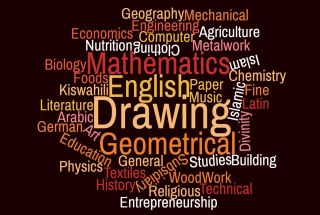
Some of the courses that prepare students for this career
-
Apprenticeship is the proven way for getting excellent workers
Know more -
How to choose the right career path
Know more -
How to draw career inspiration from what you learn in class
Know more -
why you cannot give up now
Know more -
Know more -
Know more -
Know more -
 The 10,000 hours of practice
Know more -
Know more -
Know more -
Know more -
Know more -
Know more -
Valuing today as you visualize tomorrow
Know more -
Jack Ma tells it all
Know more -
Joint courses give graduates edge
Know more -
Sports can boost your confidence
Know more -
 There are more than three job opportunities in a given profession that one can take advantage of.
Know more
Watch and Listen what the practioneers in your field are saying