


















Agricultural Economist
Conduct research, prepare reports, or formulate plans to address economic problems related to the production and distribution of goods and services or monetary and fiscal policy. May collect and process economic and statistical data using sampling techniques and econometric methods.
Agricultural Economist
Economists apply economic analysis to issues within a variety of fields, such as education, health, development, and the environment. Some economists study the cost of products, healthcare, or energy. Others examine employment levels, business cycles, exchange rates, taxes, inflation, or interest rates.
Economists often study historical trends and use them to make forecasts. They research and analyze data using a variety of software programs, including spreadsheets, statistical analysis, and database management programs. They sometimes give a presentation of their research to various audiences.
Daily/Routine Tasks
1. Research and analyze economic issues
2. Conduct surveys and collect data
3. Analyze data using mathematical models and statistical techniques
4. Prepare reports, tables, and charts and present research results
5. Interpret and forecast market trends
6. Advise businesses, governments, and individuals on economic topics
7. Design policies or make recommendations for solving economic problems
8. Write articles for publication in academic journals and other media sources
Key Knowledge Areas
Economics and Accounting — Knowledge of economic and accounting principles and practices, the financial markets, banking and the analysis and reporting of financial data.
Mathematics — Knowledge of arithmetic, algebra, geometry, calculus, statistics, and their applications.
English Language — Knowledge of the structure and content of the English language including the meaning and spelling of words, rules of composition, and grammar.
Computers and Electronics — Knowledge of circuit boards, processors, chips, electronic equipment, and computer hardware and software, including applications and programming.
Education and Training — Knowledge of principles and methods for curriculum and training design, teaching and instruction for individuals and groups, and the measurement of training effects.
Skills needed
Active Listening — Giving full attention to what other people are saying, taking time to understand the points being made, asking questions as appropriate, and not interrupting at inappropriate times.
Critical Thinking — Using logic and reasoning to identify the strengths and weaknesses of alternative solutions, conclusions or approaches to problems.
Mathematics — Using mathematics to solve problems.
Speaking — Talking to others to convey information effectively.
Writing — Communicating effectively in writing as appropriate for the needs of the audience.
Complex Problem Solving — Identifying complex problems and reviewing related information to develop and evaluate options and implement solutions.
Judgment and Decision Making — Considering the relative costs and benefits of potential actions to choose the most appropriate one.
Reading Comprehension — Understanding written sentences and paragraphs in work related documents.
Active Learning — Understanding the implications of new information for both current and future problem-solving and decision-making.
Instructing — Teaching others how to do something.
Learning Strategies — Selecting and using training/instructional methods and procedures appropriate for the situation when learning or teaching new things.
Systems Analysis — Determining how a system should work and how changes in conditions, operations, and the environment will affect outcomes.
Systems Evaluation — Identifying measures or indicators of system performance and the actions needed to improve or correct performance, relative to the goals of the system.
Time Management — Managing one's own time and the time of others.
Coordination — Adjusting actions in relation to others' actions.
Monitoring — Monitoring/Assessing performance of yourself, other individuals, or organizations to make improvements or take corrective action.
Persuasion — Persuading others to change their minds or behavior.
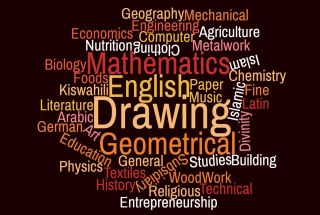
Some of the courses that prepare students for this career
Watch and Listen what the practioneers in your field are saying