














Agricultural Inspector
Inspect agricultural commodities, processing equipment, and facilities, and fish and logging operations, to ensure compliance with regulations and laws governing health, quality, and safety.
Agricultural Inspector
Sample of reported job titles: Consumer Safety Inspector (CSI); Brand Inspector; Deputy Brand Inspector; Food Inspector; Food Sanitarian; Grain Inspector; Inspector; Inspector, Food Safety and Inspection Service (Inspector, FSIS); Seed and Fertilizer Specialist; Shipping Point Inspector
Daily/Routine Tasks
1. Inspect food products and processing procedures to determine whether products are safe to eat.
Interpret and enforce government acts and regulations and explain required standards to agricultural workers.
2. Set standards for the production of meat or poultry products or for food ingredients, additives, or compounds used to prepare or package products.
3. Inspect agricultural commodities or related operations, as well as fish or logging operations, for compliance with laws and regulations governing health, quality, and safety.
4. Label and seal graded products and issue official grading certificates.
5. Monitor the operations and sanitary conditions of slaughtering or meat processing plants.
6. Take emergency actions, such as closing production facilities, if product safety is compromised.
7. Verify that transportation and handling procedures meet regulatory requirements.
Inspect the cleanliness and practices of establishment employees.
8. Examine, weigh, and measure commodities, such as poultry, eggs, meat, or seafood to certify qualities, grades, and weights.
9. Inspect or test horticultural products or livestock to detect harmful diseases, chemical residues, or infestations and to determine the quality of products or animals.
10. Monitor the grading performed by company employees to verify conformance to standards.
Key Knowledge Areas
Customer and Personal Service — Knowledge of principles and processes for providing customer and personal services. This includes customer needs assessment, meeting quality standards for services, and evaluation of customer satisfaction.
Administration and Management — Knowledge of business and management principles involved in strategic planning, resource allocation, human resources modeling, leadership technique, production methods, and coordination of people and resources.
Clerical — Knowledge of administrative and clerical procedures and systems such as word processing, managing files and records, stenography and transcription, designing forms, and other office procedures and terminology.
Law and Government — Knowledge of laws, legal codes, court procedures, precedents, government regulations, executive orders, agency rules, and the democratic political process.
Mathematics — Knowledge of arithmetic, algebra, geometry, calculus, statistics, and their applications.
Public Safety and Security — Knowledge of relevant equipment, policies, procedures, and strategies to promote effective local, state, or national security operations for the protection of people, data, property, and institutions.
English Language — Knowledge of the structure and content of the English language including the meaning and spelling of words, rules of composition, and grammar.
Skills needed
Quality Control Analysis — Conducting tests and inspections of products, services, or processes to evaluate quality or performance.
Active Listening — Giving full attention to what other people are saying, taking time to understand the points being made, asking questions as appropriate, and not interrupting at inappropriate times.
Monitoring — Monitoring/Assessing performance of yourself, other individuals, or organizations to make improvements or take corrective action.
Reading Comprehension — Understanding written sentences and paragraphs in work related documents.
Critical Thinking — Using logic and reasoning to identify the strengths and weaknesses of alternative solutions, conclusions or approaches to problems.
Speaking — Talking to others to convey information effectively.
Active Learning — Understanding the implications of new information for both current and future problem-solving and decision-making.
Judgment and Decision Making — Considering the relative costs and benefits of potential actions to choose the most appropriate one.
Operation Monitoring — Watching gauges, dials, or other indicators to make sure a machine is working properly.
Complex Problem Solving — Identifying complex problems and reviewing related information to develop and evaluate options and implement solutions.
Coordination — Adjusting actions in relation to others' actions.
Systems Analysis — Determining how a system should work and how changes in conditions, operations, and the environment will affect outcomes.
Systems Evaluation — Identifying measures or indicators of system performance and the actions needed to improve or correct performance, relative to the goals of the system.
Writing — Communicating effectively in writing as appropriate for the needs of the audience.
Instructing — Teaching others how to do something.
Some of the courses that prepare students for this career
-
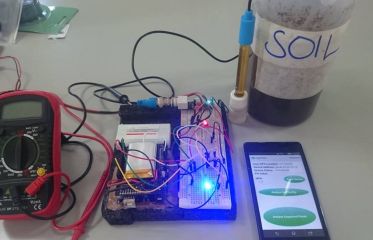 Empowering farmers with IT
Know more
-
Apprenticeship is the proven way for getting excellent workers
Know more -
How to choose the right career path
Know more -
How to draw career inspiration from what you learn in class
Know more -
why you cannot give up now
Know more -
Know more -
Know more -
Know more -
 The 10,000 hours of practice
Know more -
Know more -
Know more -
Know more -
Know more -
The future of products from biotechnology hangs in balance
Know more -
Know more -
Valuing today as you visualize tomorrow
Know more -
Jack Ma tells it all
Know more -
Joint courses give graduates edge
Know more -
Sports can boost your confidence
Know more
Watch and Listen what the practioneers in your field are saying