Plan, direct, or coordinate the management or operation of farms, ranches, greenhouses, aqua-cultural operations, nurseries, timber tracts, or other agricultural establishments. May hire, train, and supervise farm workers or contract for services to carry out the day-to-day activities of the managed operation. May engage in or supervise planting, cultivating, harvesting, and financial and marketing activities.
Farmers, ranchers, and other agricultural managers monitor the constantly changing prices for their products. They use different strategies to protect themselves from unpredictable changes in the markets. For example, farmers carefully plan the combination of crops that they grow, so if the price of one crop drops, they will have enough income from another crop to make up for the loss. Farmers and ranchers also track disease and weather conditions closely, because disease and bad weather may have a negative impact on crop yields or animal health. When farmers and ranchers plan ahead, they may be able to store their crops or keep their livestock to take advantage of higher prices later in the year.
Daily/Routine Tasks
1. Supervise all steps of the crop production and ranging process, including planting, fertilizing, harvesting, and herding
2. Determine how to raise crops or livestock by evaluating factors such as market conditions, disease, soil conditions, and the availability of federal programs
3. Select and purchase supplies, such as seed, fertilizers, and farm machinery
4. Ensure that farm machinery is maintained and repaired
5. Adapt their duties to the seasons, weather conditions, or a crop’s growing cycle
6. Maintain farm facilities, such as water pipes, hoses, fences, and animal shelters
7. Serve as the sales agent for livestock, crops, and dairy products
8. Record financial, tax, production, and employee information
Key Knowledge Areas
Biology — Knowledge of plant and animal organisms, their tissues, cells, functions, interdependencies, and interactions with each other and the environment.
Food Production — Knowledge of techniques and equipment for planting, growing, and harvesting food products (both plant and animal) for consumption, including storage/handling techniques. Administration and Management — Knowledge of business and management principles involved in strategic planning, resource allocation, human resources modeling, leadership technique, production methods, and coordination of people and resources. Engineering and Technology — Knowledge of the practical application of engineering science and technology. This includes applying principles, techniques, procedures, and equipment to the design and production of various goods and services. Production and Processing — Knowledge of raw materials, production processes, quality control, costs, and other techniques for maximizing the effective manufacture and distribution of goods. Mathematics — Knowledge of arithmetic, algebra, geometry, calculus, statistics, and their applications. Chemistry — Knowledge of the chemical composition, structure, and properties of substances and of the chemical processes and transformations that they undergo. This includes uses of chemicals and their interactions, danger signs, production techniques, and disposal methods. Customer and Personal Service — Knowledge of principles and processes for providing customer and personal services. This includes customer needs assessment, meeting quality standards for services, and evaluation of customer satisfaction. Mechanical — Knowledge of machines and tools, including their designs, uses, repair, and maintenance.
Important Qualities for Agricultural Managers
Analytical skills: Farmers, ranchers, and other agricultural managers must monitor and assess the quality of their land or livestock. These tasks require precision and accuracy.
Critical-thinking skills: Farmers, ranchers, and other agricultural managers make tough decisions through sound reasoning and judgment. They determine how to improve their harvest and livestock, all the while reacting appropriately to external factors.
Interpersonal skills: Farmers, ranchers, and other agricultural managers supervise laborers and other workers, so effective communication is critical.
Mechanical skills: Farmers, ranchers, and other agricultural managers must be able to operate complex machinery and occasionally perform routine maintenance.
Physical strength: Farmers, ranchers, and other agricultural managers—particularly those who work on small farms—must be able to perform physically strenuous, repetitive tasks, such as lifting heavy objects and bending at the waist.
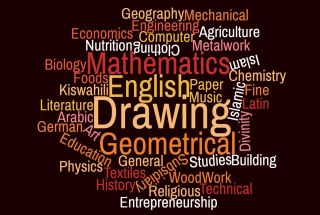
Some of the courses that prepare students for this career