















Urban and regional planner
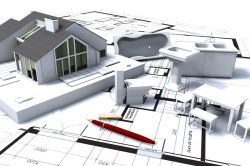
Urban and regional planners develop comprehensive plans and programs for use of land and physical facilities of jurisdictions, such as towns, cities, counties, and metropolitan areas.
Urban and regional planner
Also Known as: City Planner, Community Development Director, Community Development Planner, Housing Development Specialist, Housing Grant Analyst, Neighborhood Planner, Planner, Planning Director, Regional Planner, Urban Design Consultant
An urban planner or city planner is a professional who works in the field of urban planning for the purpose of optimizing the effectiveness of a community's land. They formulate plans for the development and management of urban and suburban areas, typically analyzing land use compatibility as well as economic, environmental and social trends.
Urban planners are usually hired by developers, private property owners, private planning firms and local/regional governments to assist in the large-scale planning of communal and commercial developments, as well as public facilities and transportation systems. Urban planners in the public role often assist the public and serve as technical advisors in the complex web of the community's political environment. Related disciplines include community, cultural, environmental, historic preservation, housing, regional and transportation planning.
Daily tasks
1. Mediate community disputes or assist in developing alternative plans or recommendations for programs or projects.
2. Coordinate work with economic consultants or architects during the formulation of plans or the design of large pieces of infrastructure.
3. Determine the effects of regulatory limitations on projects.
4. Conduct field investigations, surveys, impact studies, or other research to compile and analyze data on economic, social, regulatory, or physical factors affecting land use.
5. Keep informed about economic or legal issues involved in zoning codes, building codes, or environmental regulations.
6. Discuss with planning officials the purpose of land use projects, such as transportation, conservation, residential, commercial, industrial, or community use.
7. Recommend approval, denial, or conditional approval of proposals.
8. Advise planning officials on project feasibility, cost-effectiveness, regulatory conformance, or possible alternatives.
9. Hold public meetings with government officials, social scientists, lawyers, developers, the public, or special interest groups to formulate, develop, or address issues regarding land use or community plans.
10. Review and evaluate environmental impact reports pertaining to private or public planning projects or programs.
11. Design, promote, or administer government plans or policies affecting land use, zoning, public utilities, community facilities, housing, or transportation.
Key knowledge areas
English Language - Knowledge of the structure and content of the English language including the meaning and spelling of words, rules of composition, and grammar.
Law and Government - Knowledge of laws, legal codes, court procedures, precedents, government regulations, executive orders, agency rules, and the democratic political process.
Administration and Management - Knowledge of business and management principles involved in strategic planning, resource allocation, human resources modeling, leadership technique, production methods, and coordination of people and resources.
Transportation - Knowledge of principles and methods for moving people or goods by air, rail, sea, or road, including the relative costs and benefits.
Customer and Personal Service - Knowledge of principles and processes for providing customer and personal services. This includes customer needs assessment, meeting quality standards for services, and evaluation of customer satisfaction.
Geography - Knowledge of principles and methods for describing the features of land, sea, and air masses, including their physical characteristics, locations, interrelationships, and distribution of plant, animal, and human life.
Computers and Electronics - Knowledge of circuit boards, processors, chips, electronic equipment, and computer hardware and software, including applications and programming.
Mathematics - Knowledge of arithmetic, algebra, geometry, calculus, statistics, and their applications.
Key skills
Active Listening: Giving full attention to what other people are saying, taking time to understand the points being made, asking questions as appropriate, and not interrupting at inappropriate times.
Speaking: Talking to others to convey information effectively.
Reading Comprehension Understanding written sentences and paragraphs in work related documents.
Judgment and Decision Making: Considering the relative costs and benefits of potential actions to choose the most appropriate one.
Critical Thinking: Using logic and reasoning to identify the strengths and weaknesses of alternative solutions, conclusions or approaches to problems.
Systems Analysis: Determining how a system should work and how changes in conditions, operations, and the environment will affect outcomes.
Writing: Communicating effectively in writing as appropriate for the needs of the audience.
Active Learning: Understanding the implications of new information for both current and future problem-solving and decision-making.
In developing their plan for a community (whether commercial, residential, agricultural, natural or recreational), urban planners must also consider a wide array of issues such as sustainability, air pollution, traffic congestion, crime, land values, legislation and zoning codes.
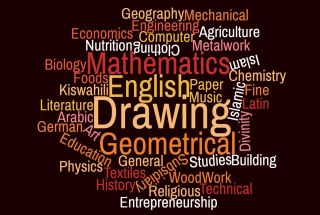
Some of the courses that prepare students for this career
-
Apprenticeship is the proven way for getting excellent workers
Know more -
How to choose the right career path
Know more -
How to draw career inspiration from what you learn in class
Know more -
why you cannot give up now
Know more -
Know more -
Know more -
Know more -
 The 10,000 hours of practice
Know more -
Know more -
Know more -
Know more -
Know more -
Know more -
Valuing today as you visualize tomorrow
Know more -
Jack Ma tells it all
Know more -
Joint courses give graduates edge
Know more -
Sports can boost your confidence
Know more -
 There are more than three job opportunities in a given profession that one can take advantage of.
Know more
Watch and Listen what the practioneers in your field are saying