













Reporter and Correspondent
Collect and analyze facts about newsworthy events by interview, investigation, or observation. Report and write stories for newspaper, news magazine, radio, or television. Sample of reported job titles: Anchor, General Assignment Reporter, News Director, News Reporter, Reporter, Sports Writer, Staff Writer, Television News Anchor (TV News Anchor), Television News Reporter, Television Reporter (TV Reporter)
Reporter and Correspondent
Daily Tasks
1. Receive assignments or evaluate leads or tips to develop story ideas.
2. Research a story's background information to provide complete and accurate information.
3. Arrange interviews with people who can provide information about a story.
4. Establish and maintain relationships with individuals who are credible sources of information.
5. Report news stories for publication or broadcast, describing the background and details of events.
6. Gather information about events through research, interviews, experience, or attendance at political, news, sports, artistic, social, or other functions.
7. Revise work to meet editorial approval or to fit time or space requirements.
8. Review and evaluate notes taken about news events to isolate pertinent facts and details.
9. Investigate breaking news developments, such as disasters, crimes, or human-interest stories.
10. Review written, audio, or video copy and correct errors in content, grammar, or punctuation, following prescribed editorial style and formatting guidelines.
Key Knowledge Areas
English Language — Knowledge of the structure and content of the English language including the meaning and spelling of words, rules of composition, and grammar.
Communications and Media — Knowledge of media production, communication, and dissemination techniques and methods. This includes alternative ways to inform and entertain via written, oral, and visual media.
Law and Government — Knowledge of laws, legal codes, court procedures, precedents, government regulations, executive orders, agency rules, and the democratic political process.
Telecommunications — Knowledge of transmission, broadcasting, switching, control, and operation of telecommunications systems.
Key Skills
Active Listening — Giving full attention to what other people are saying, taking time to understand the points being made, asking questions as appropriate, and not interrupting at inappropriate times.
Reading Comprehension — Understanding written sentences and paragraphs in work related documents.
Writing — Communicating effectively in writing as appropriate for the needs of the audience.
Speaking — Talking to others to convey information effectively.
Critical Thinking — Using logic and reasoning to identify the strengths and weaknesses of alternative solutions, conclusions or approaches to problems.
Social Perceptiveness — Being aware of others' reactions and understanding why they react as they do.
Active Learning — Understanding the implications of new information for both current and future problem-solving and decision-making.
Time Management — Managing one's own time and the time of others.
Complex Problem Solving — Identifying complex problems and reviewing related information to develop and evaluate options and implement solutions.
Monitoring — Monitoring/Assessing performance of yourself, other individuals, or organizations to make improvements or take corrective action.
Judgment and Decision Making — Considering the relative costs and benefits of potential actions to choose the most appropriate one.
Persuasion — Persuading others to change their minds or behavior.
Coordination — Adjusting actions in relation to others' actions.
Negotiation — Bringing others together and trying to reconcile differences.
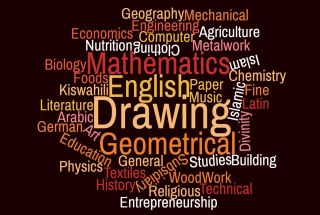
Some of the courses that prepare students for this career
-
Apprenticeship is the proven way for getting excellent workers
Know more -
How to choose the right career path
Know more -
How to draw career inspiration from what you learn in class
Know more -
Know more -
why you cannot give up now
Know more -
Know more -
Know more -
Know more -
Know more -
 The 10,000 hours of practice
Know more -
Know more -
Know more -
Know more -
Know more -
Know more -
Valuing today as you visualize tomorrow
Know more -
Jack Ma tells it all
Know more -
Joint courses give graduates edge
Know more -
Sports can boost your confidence
Know more -
 There are more than three job opportunities in a given profession that one can take advantage of.
Know more
Watch and Listen what the practioneers in your field are saying