
















Credit Manager
Daily tasks/Routine activities
1. Keep records of customers' charges and payments.
2. Evaluate customers' computerized credit records and payment histories to decide whether to approve new credit, based on predetermined standards.
3. File sales slips in customers' ledgers for billing purposes.
4. Receive charge slips or credit applications by mail, or receive information from salespeople or merchants by telephone.
5. Mail charge statements to customers.
6. Prepare credit cards or charge account plates.
Key knowledge areas
These knowledge areas are very relevantto a credit manager;
English Language — Knowledge of the structure and content of the English language including the meaning and spelling of words, rules of composition, and grammar.
Customer and Personal Service — Knowledge of principles and processes for providing customer and personal services. This includes customer needs assessment, meeting quality standards for services, and evaluation of customer satisfaction.
Computers and Electronics — Knowledge of circuit boards, processors, chips, electronic equipment, and computer hardware and software, including applications and programming.
Mathematics — Knowledge of arithmetic, algebra, geometry, calculus, statistics, and their applications.
Law and Government — Knowledge of laws, legal codes, court procedures, precedents, government regulations, executive orders, agency rules, and the democratic political process.
Skills
These skills can help a credit manager execute his work effectively;
Active Listening — Giving full attention to what other people are saying, taking time to understand the points being made, asking questions as appropriate, and not interrupting at inappropriate times.
Speaking — Talking to others to convey information effectively.
Reading Comprehension — Understanding written sentences and paragraphs in work related documents.
Critical Thinking — Using logic and reasoning to identify the strengths and weaknesses of alternative solutions, conclusions or approaches to problems.
Judgment and Decision Making — Considering the relative costs and benefits of potential actions to choose the most appropriate one.
Abilities
Oral Comprehension — The ability to listen to and understand information and ideas presented through spoken words and sentences.
Oral Expression — The ability to communicate information and ideas in speaking so others will understand.
Written Comprehension — The ability to read and understand information and ideas presented in writing.
Written Expression — The ability to communicate information and ideas in writing so others will understand.
Near Vision — The ability to see details at close range (within a few feet of the observer).
Problem Sensitivity — The ability to tell when something is wrong or is likely to go wrong. It does not involve solving the problem, only recognizing there is a problem.
Information Ordering — The ability to arrange things or actions in a certain order or pattern according to a specific rule or set of rules (e.g., patterns of numbers, letters, words, pictures, mathematical operations).
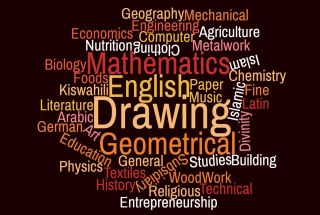
Some of the courses that prepare students for this career
-
Apprenticeship is the proven way for getting excellent workers
Know more -
How to choose the right career path
Know more -
How to draw career inspiration from what you learn in class
Know more -
why you cannot give up now
Know more -
Know more -
Know more -
Know more -
 The 10,000 hours of practice
Know more -
Know more -
Know more -
Know more -
Know more -
Know more -
Valuing today as you visualize tomorrow
Know more -
Jack Ma tells it all
Know more -
Joint courses give graduates edge
Know more -
Sports can boost your confidence
Know more
Watch and Listen what the practioneers in your field are saying