
















Cashier
Daily tasks/routine activities.
1. Receive payment by cash, check, credit cards, vouchers, or automatic debits.
2. Issue receipts, refunds, credits, or change due to customers.
3. Assist customers by providing information and resolving their complaints.
4. Establish or identify prices of goods, services or admission, and tabulate bills using calculators, cash registers, or optical price scanners.
5. Greet customers entering establishments.
6. Answer customers' questions, and provide information on procedures or policies.
7. Sell tickets and other items to customers.
8. Process merchandise returns and exchanges.
9. Maintain clean and orderly checkout areas and complete other general cleaning duties, such as mopping floors and emptying trash cans.
10. Stock shelves, and mark prices on shelves and items.
Key knowledge areas
Customer and Personal Service — Knowledge of principles and processes for providing customer and personal services. This includes customer needs assessment, meeting quality standards for services, and evaluation of customer satisfaction.
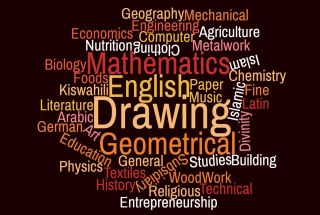
Mathematics — Knowledge of arithmetic, algebra, geometry, calculus, statistics, and their applications.
English Language — Knowledge of the structure and content of the English language including the meaning and spelling of words, rules of composition, and grammar.
Skills and Abiities..
Active Listening — Giving full attention to what other people are saying, taking time to understand the points being made, asking questions as appropriate, and not interrupting at inappropriate times.
Monitoring — Monitoring/Assessing performance of yourself, other individuals, or organizations to make improvements or take corrective action.
Reading Comprehension — Understanding written sentences and paragraphs in work related documents.
Critical Thinking — Using logic and reasoning to identify the strengths and weaknesses of alternative solutions, conclusions or approaches to problems.
Deductive Reasoning — The ability to apply general rules to specific problems to produce answers that make sense.
Inductive Reasoning — The ability to combine pieces of information to form general rules or conclusions (includes finding a relationship among seemingly unrelated events).
Oral Comprehension — The ability to listen to and understand information and ideas presented through spoken words and sentences.
Some of the courses that prepare students for this career
-
Apprenticeship is the proven way for getting excellent workers
Know more -
How to choose the right career path
Know more -
How to draw career inspiration from what you learn in class
Know more -
why you cannot give up now
Know more -
Know more -
Know more -
Know more -
 The 10,000 hours of practice
Know more -
Know more -
Know more -
Know more -
Know more -
Know more -
Valuing today as you visualize tomorrow
Know more -
Jack Ma tells it all
Know more -
Joint courses give graduates edge
Know more -
Sports can boost your confidence
Know more
Watch and Listen what the practioneers in your field are saying