














Property Appraiser
Appraise real property to determine its value for purchase, sales, investment, mortgage, or loan purposes.
Property Appraiser
Daily tasks/Routine activities
1. Compute final estimation of property values, taking into account such factors as depreciation, replacement costs, value comparisons of similar properties, and income potential.
2. Prepare written reports that estimate property values, outline methods by which the estimations were made, and meet appraisal standards.
3. Collect and analyze relevant data to identify real estate market trends.
4. Inspect properties to evaluate construction, condition, special features, and functional design, and to take property measurements.
5. Examine income records and operating costs of income properties.
6. Evaluate land and neighborhoods where properties are situated, considering locations and trends or impending changes that could influence future values.
7. Search public records for transactions such as sales, leases, and assessments.
8. Check building codes and zoning bylaws to determine any effects on the properties being appraised.
9. Verify legal descriptions of properties by comparing them to county records.
10. Interview persons familiar with properties and immediate surroundings, such as contractors, home owners, and realtors, to obtain pertinent information.
11. Photograph interiors and exteriors of properties to assist in estimating property value, substantiate findings, and complete appraisal reports.
12. Obtain county land values and sales information about nearby properties to aid in establishment of property values.
Key knowledge areas
English Language — Knowledge of the structure and content of the English language including the meaning and spelling of words, rules of composition, and grammar.
Mathematics — Knowledge of arithmetic, algebra, geometry, calculus, statistics, and their applications.
Computers and Electronics — Knowledge of circuit boards, processors, chips, electronic equipment, and computer hardware and software, including applications and programming.
Building and Construction — Knowledge of materials, methods, and the tools involved in the construction or repair of houses, buildings, or other structures such as highways and roads.
Customer and Personal Service — Knowledge of principles and processes for providing customer and personal services. This includes customer needs assessment, meeting quality standards for services, and evaluation of customer satisfaction.
Reading Comprehension — Understanding written sentences and paragraphs in work related documents.
Active Listening — Giving full attention to what other people are saying, taking time to understand the points being made, asking questions as appropriate, and not interrupting at inappropriate times.
Critical Thinking — Using logic and reasoning to identify the strengths and weaknesses of alternative solutions, conclusions or approaches to problems.
Judgment and Decision Making — Considering the relative costs and benefits of potential actions to choose the most appropriate one.
Writing — Communicating effectively in writing as appropriate for the needs of the audience.
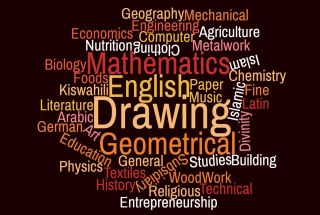
Some of the courses that prepare students for this career
-
Apprenticeship is the proven way for getting excellent workers
Know more -
How to choose the right career path
Know more -
How to draw career inspiration from what you learn in class
Know more -
why you cannot give up now
Know more -
Know more -
Know more -
Know more -
 The 10,000 hours of practice
Know more -
Know more -
Know more -
Know more -
Know more -
Know more -
Valuing today as you visualize tomorrow
Know more -
Jack Ma tells it all
Know more -
Joint courses give graduates edge
Know more -
Sports can boost your confidence
Know more
Watch and Listen what the practioneers in your field are saying