















Environmental economic analyst
Conduct economic analysis related to environmental protection and use of the natural environment, such as water, air, land, and renewable energy resources. Evaluate and quantify benefits, costs, incentives, and impacts of alternative options using economic principles and statistical techniques.
Environmental economic analyst
Daily tasks/Routine activities.
As an Environmental Economic Analyst, the tasks listed below will be routin
1. Develop systems for collecting, analyzing, and interpreting environmental and economic data.
2. Examine the exhaustibility of natural resources or the long-term costs of environmental rehabilitation.
3. Identify and recommend environmentally-friendly business practices.
4. Interpret indicators to ascertain the overall health of an environment.
5. Monitor or analyze market and environmental trends.
6. Perform complex, dynamic, and integrated mathematical modeling of ecological, environmental, or economic systems.
7. Prepare and deliver presentations to communicate economic and environmental study results, to present policy recommendations, or to raise awareness of environmental consequences.
8. Write research proposals and grant applications to obtain private or public funding for environmental and economic studies.
9. Write social, legal, or economic impact statements to inform decision-makers for natural resource policies, standards, or programs.
10. Write technical documents or academic articles to communicate study results or economic forecasts. ?
Key knowledge areas
These are the relevant knowledge areas an Environmental economic analyst should have;
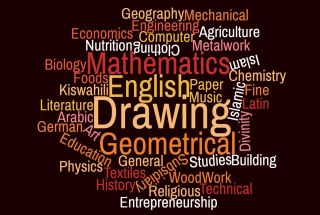
Economics and Accounting— Knowledge of economic and accounting principles and practices, the financial markets, banking and the analysis and reporting of financial data.
Mathematics — Knowledge of arithmetic, algebra, geometry, calculus, statistics, and their applications.
English Language — Knowledge of the structure and content of the English language including the meaning and spelling of words, rules of composition, and grammar.
Law and Government — Knowledge of laws, legal codes, court procedures, precedents, government regulations, executive orders, agency rules, and the democratic political process.
Computers and Electronics — Knowledge of circuit boards, processors, chips, electronic equipment, and computer hardware and software, including applications and programming.
Skills and Abilities
The following are the relevant skills and abilities for an enevironmental economic analyst to execute his/her duties;
Reading Comprehension — Understanding written sentences and paragraphs in work related documents.
Writing — Communicating effectively in writing as appropriate for the needs of the audience.
Critical Thinking — Using logic and reasoning to identify the strengths and weaknesses of alternative solutions, conclusions or approaches to problems.
Active Listening — Giving full attention to what other people are saying, taking time to understand the points being made, asking questions as appropriate, and not interrupting at inappropriate times.
Judgment and Decision Making — Considering the relative costs and benefits of potential actions to choose the most appropriate one.
Written Comprehension — The ability to read and understand information and ideas presented in writing.
Mathematical Reasoning — The ability to choose the right mathematical methods or formulas to solve a problem.
Written Expression — The ability to communicate information and ideas in writing so others will understand.
Inductive Reasoning — The ability to combine pieces of information to form general rules or conclusions (includes finding a relationship among seemingly unrelated events).
Deductive Reasoning — The ability to apply general rules to specific problems to produce answers that make sense.
Some of the courses that prepare students for this career
-
Apprenticeship is the proven way for getting excellent workers
Know more -
How to choose the right career path
Know more -
How to draw career inspiration from what you learn in class
Know more -
why you cannot give up now
Know more -
Know more -
Know more -
Know more -
 The 10,000 hours of practice
Know more -
Know more -
Know more -
Know more -
Know more -
Know more -
Valuing today as you visualize tomorrow
Know more -
Jack Ma tells it all
Know more -
Joint courses give graduates edge
Know more -
Sports can boost your confidence
Know more
Watch and Listen what the practioneers in your field are saying