Selects acquires and organises a vast amount of information and makes it as available and efficient as possible.
Administer libraries and perform related library services. They work in a variety of settings, including public libraries, educational institutions, museums, corporations, government agencies, law firms, non-profit organizations, and healthcare providers.
1. Review and evaluate materials, using book reviews, catalogs, faculty recommendations, and current holdings to select and order print, audio-visual, and electronic resources.
2. Locate unusual or unique information in response to specific requests.
3. Explain use of library facilities, resources, equipment, and services and provide information about library policies.
4. Search standard reference materials, including online sources and the Internet, to answer patrons' reference questions
5. Develop library policies and procedures.
6. Organize collections of books, publications, documents, audio-visual aids, and other reference materials for convenient access.
7. Develop, maintain, and troubleshoot information access aids, such as databases, annotated bibliographies, web pages, electronic pathfinders, software programs, and online tutorials.
8. Direct and train library staff in duties, such as receiving, shelving, researching, cataloging, and equipment use.
9. Evaluate vendor products and performance, negotiate contracts, and place orders.
10. Compile lists of books, periodicals, articles, and audio-visual materials on particular subjects.
Key knowlwdge areas.
These are the relevant key areas a librarian should be equiped with.
English Language — Knowledge of the structure and content of the English languageincluding the meaning and spelling of words, rules of composition, and grammar.
Customer and Personal Service — Knowledge of principles and processes for providing customer and personal services. This includes customer needs assessment, meeting quality standards for services, and evaluation of customer satisfaction.
Computers and Electronics — Knowledge of circuit boards, processors, chips, electronic equipment, and computer hardware and software, including applications and programming.
Education and Training — Knowledge of principles and methods for curriculum and training design, teaching and instruction for individuals and groups, and the measurement of training effects.
Clerical — Knowledge of administrative and clerical procedures and systems such as word processing, managing files and records, stenography and transcription, designing forms, and other office procedures and terminology.
Administration and Management — Knowledge of business and management principles involved in strategic planning, resource allocation, human resources modeling, leadership technique, production methods, and coordination of people and resources.
Communications and Media — Knowledge of media production, communication, and dissemination techniques and methods. This includes alternative ways to inform and entertain via written, oral, and visual media.
Skills and abilities.
A librarian should have these skills and abilities to effectively carry out hid/her duties.
Quality Control Analysis — Conducting tests and inspections of products, services, or processes to evaluate quality or performance.
Active Listening — Giving full attention to what other people are saying, taking time to understand the points being made, asking questions as appropriate, and not interrupting at inappropriate times.
Monitoring — Monitoring/Assessing performance of yourself, other individuals, or organizations to make improvements or take corrective action.
Reading Comprehension — Understanding written sentences and paragraphs in work related documents.
Critical Thinking — Using logic and reasoning to identify the strengths and weaknesses of alternative solutions, conclusions or approaches to problems.
Problem Sensitivity — The ability to tell when something is wrong or is likely to go wrong. It does not involve solving the problem, only recognizing there is a problem.
Deductive Reasoning — The ability to apply general rules to specific problems to produce answers that make sense.
Inductive Reasoning — The ability to combine pieces of information to form general rules or conclusions (includes finding a relationship among seemingly unrelated events).
Oral Comprehension — The ability to listen to and understand information and ideas presented through spoken words and sentences.
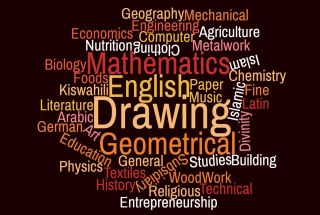
Some of the courses that prepare students for this career















 The 10,000 hours of practice