















Town and Regional Planner
Develops programs for the best development of towns, cities and rural areas
Town and Regional Planner
Town and regional planners develop, from regional to neighbourhood level, programmes for the most advantageous and purposeful development of towns, cities and rural areas.
Town and regional planners focus on improving the living conditions of people. They estimate future needs for housing, business and industrial sites, community facilities and open spaces to meet the needs of expansion and renewal.
The work also entails further investigating the nature and extent of problems concerning prospective development such as projecting future needs in traffic and transportation. They need to keep up with legal issues involving community development and changes in housing and building codes.
The growing Ugandan population and quick urbanization offer town and regional planners the opportunity to play a role in the development of affordable housing and effective infrastructure. The need to conserve historical and natural environments has also become an important development issue.
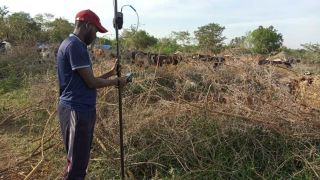
Most of the work is done in an office but it is also necessary to go out on site to see whether everything is done according to proposed development plans. Town and regional planners work closely with architects, engineers, economists, sociologists, administrators and management on matters concerning public interest and industry.
Town plannners play a big role in the development of cities like Kampala. Below are their day to day work activities
Daily Responsibilities / Routine Tasks
1. Discusses new ideas, plans and future developments with government officials
2. Compiles, codes, categorises, calculates, tabulates, audits, or verifies information or data
3. Designs and promotes government plans and policies affecting land use, zoning, public utilities, community facilities, housing and transportation.
4. Formulates and develops community plans
5. Assesses the feasibility studies of proposals
6. Analyses information and evaluates results to choose the best solution and solve problems
7.And any other tasks that fall in line with planning
Key Knowledge Areas
To excel as an Urban Planner, it is imperative to be well informed in the areas listed below
English Language — Knowledge of the structure and content of the English language including the meaning and spelling of words, rules of composition, and grammar.
Law and Government — Knowledge of laws, legal codes, court procedures, precedents, government regulations, executive orders, agency rules, and the democratic political process.Be well versed with construction laws, land laws that govern the nation
Administration and Management — Knowledge of business and management principles involved in strategic planning, resource allocation, human resources modeling, leadership technique, production methods, and coordination of people and resources.
Geography — Knowledge of principles and methods for describing the features of land, sea, and air masses, including their physical characteristics, locations, interrelationships, and distribution of plant, animal, and human life.
Communications and Media — Knowledge of media production, communication, and dissemination techniques and methods. This includes alternative ways to inform and entertain via written, oral, and visual media.
Design — Knowledge of design techniques, tools, and principles involved in production of precision technical plans, blueprints, drawings, and models.
Mathematics — Knowledge of arithmetic, algebra, geometry, calculus, statistics, and their applications.
Qualities / Top Skills
Active Listening — Giving full attention to what other people are saying, taking time to understand the points being made, asking questions as appropriate, and not interrupting at inappropriate times.
Reading Comprehension — Understanding written sentences and paragraphs in work related documents.
Critical Thinking — Using logic and reasoning to identify the strengths and weaknesses of alternative solutions, conclusions or approaches to problems.
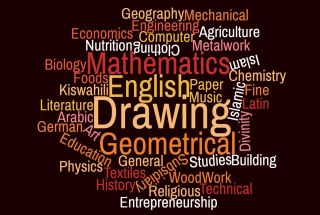
Some of the courses that prepare students for this career
-
Apprenticeship is the proven way for getting excellent workers
Know more -
How to choose the right career path
Know more -
How to draw career inspiration from what you learn in class
Know more -
why you cannot give up now
Know more -
Know more -
Know more -
Know more -
 The 10,000 hours of practice
Know more -
Know more -
Know more -
Know more -
Know more -
Know more -
Valuing today as you visualize tomorrow
Know more -
Jack Ma tells it all
Know more -
Joint courses give graduates edge
Know more -
Sports can boost your confidence
Know more -
 There are more than three job opportunities in a given profession that one can take advantage of.
Know more -
Know more
Watch and Listen what the practioneers in your field are saying